
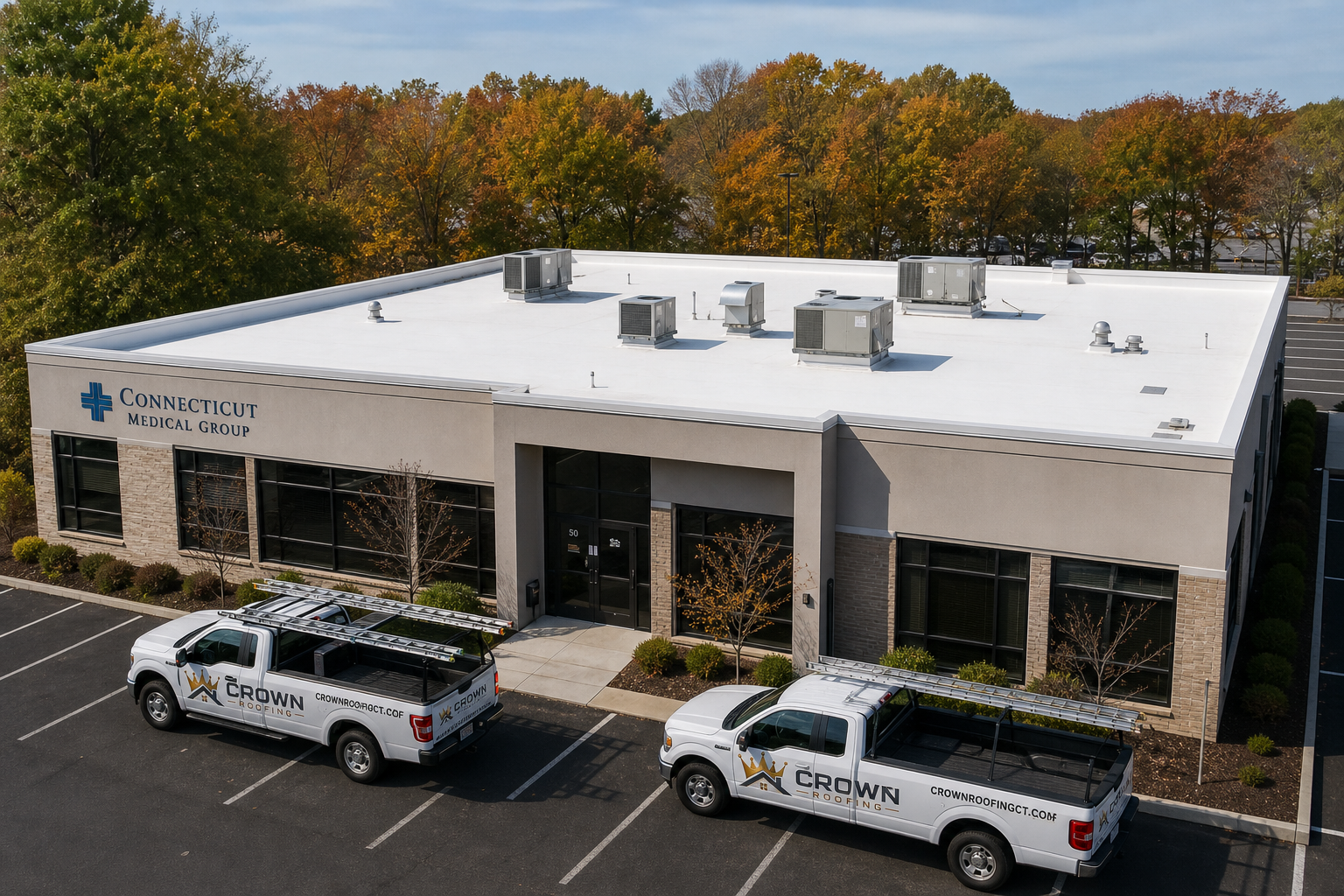
A multi-tenant commercial building along Danbury's Federal Road corridor developed recurring top-floor stains after rain. Property management assumed HVAC age was the culprit until moisture mapping showed ponding and open TPO seams within five feet of a rooftop unit curb.
The Problem
Standing water held for more than 48 hours after rain near a primary drain. Tenant reports spiked after a mechanical vendor serviced an RTU without walk pads. Prior patch work used incompatible sealant that cracked in winter. Capital budget did not allow full replacement this fiscal year—management needed durable repair plus a maintenance path.
Inspection Findings
Infrared-style moisture probing (and visual insulation checks at the ceiling) confirmed wet polyiso near the drain bowl. Photos documented three open heat-welded seams, a punctured membrane field from dropped hardware, and a scupper strainer clogged with seasonal debris.
- Ponding depth mapped after controlled water test
- RTU curb flashing lifted at upstream corner
- Drain bowl partially obstructed—slow release after rain
- No widespread membrane brittleness—localized failure pattern
Recommended Solution
Clear and upgrade drain strainers, install tapered insulation cricket to promote flow toward scuppers, heat-weld TPO patches with matching weld stock, rebuild curb flashing with reinforced corners, and add walk pads from roof access to RTU service zones. Establish quarterly drain and seam photo logs for the property manager.
Materials & Specifications
Matching TPO weld stock, manufacturer-approved primer where required, new stainless scupper strainers, compatible polyiso taper boards, walk pad paths, and reinforced penetration flashings. Vendor memo added requiring walk pads and puncture reporting within 24 hours of HVAC service.
Work Process
Work scheduled on a dry week with tenant notification for minimal interior disruption. Sections opened only as needed—no full tear-off. Welds probed and photographed. Cricket installed with positive slope verified by level and post-rain observation. Management received PDF log template for quarterly maintenance.
Danbury Commercial Context
Danbury's Route 7 and Federal Road retail and office stock shares low-slope TPO and EPDM systems with similar drain and HVAC puncture patterns. City of Danbury, CT commercial permits may apply depending on scope—we confirmed requirements before work. Connecticut Department of Consumer Protection — contractor licensing licensing and insurance certificates provided to ownership before contract signing.
Result
Ponding reduced, leaks stopped after first post-repair rain, and no tenant calls on the same leak path six months later. Capital replacement timeline documented for board budgeting—estimated remaining membrane life with photos.
Lessons for Property Managers
Most commercial leaks on Danbury low-slope roofs trace to drains, curbs, and vendor foot traffic—not random aging. Require HVAC vendors to use walk pads and report punctures the same week. Photo logs beat verbal assurances when tenants call during the next rain event.
When ponding persists after rain, repair without drainage correction is temporary. Budget crickets and strainer upgrades before coating bids—surface products do not fix standing water physics.
Related Services & Pages
- Roofing contractor Danbury CT
- Related blog article
- All Connecticut service areas
- Client reviews
- Request a project estimate
Services on this project
More case studies
- Metal Roof Installation in Ridgefield
- Shingle Roof Replacement in Bethel
- Commercial Roofing in Shelton
Local & Official Resources
- Connecticut Official State Website
- City of Danbury, CT
- Fairfield County, Connecticut — Wikipedia overview
- Connecticut Department of Consumer Protection — contractor licensing
External links open in a new tab. Crown Roofing & Exteriors is not affiliated with municipal or state websites—we cite them for permit and consumer research context.