
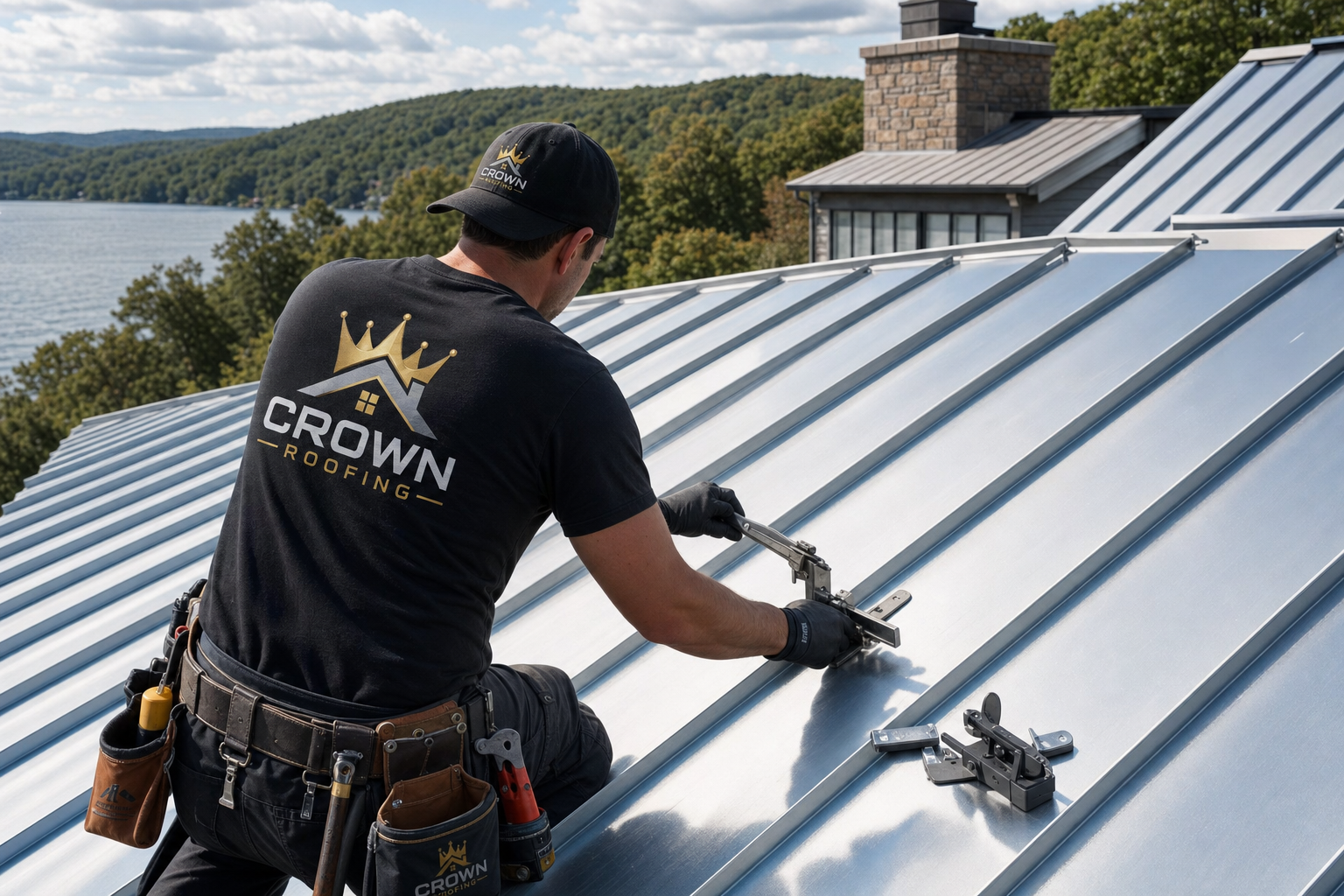

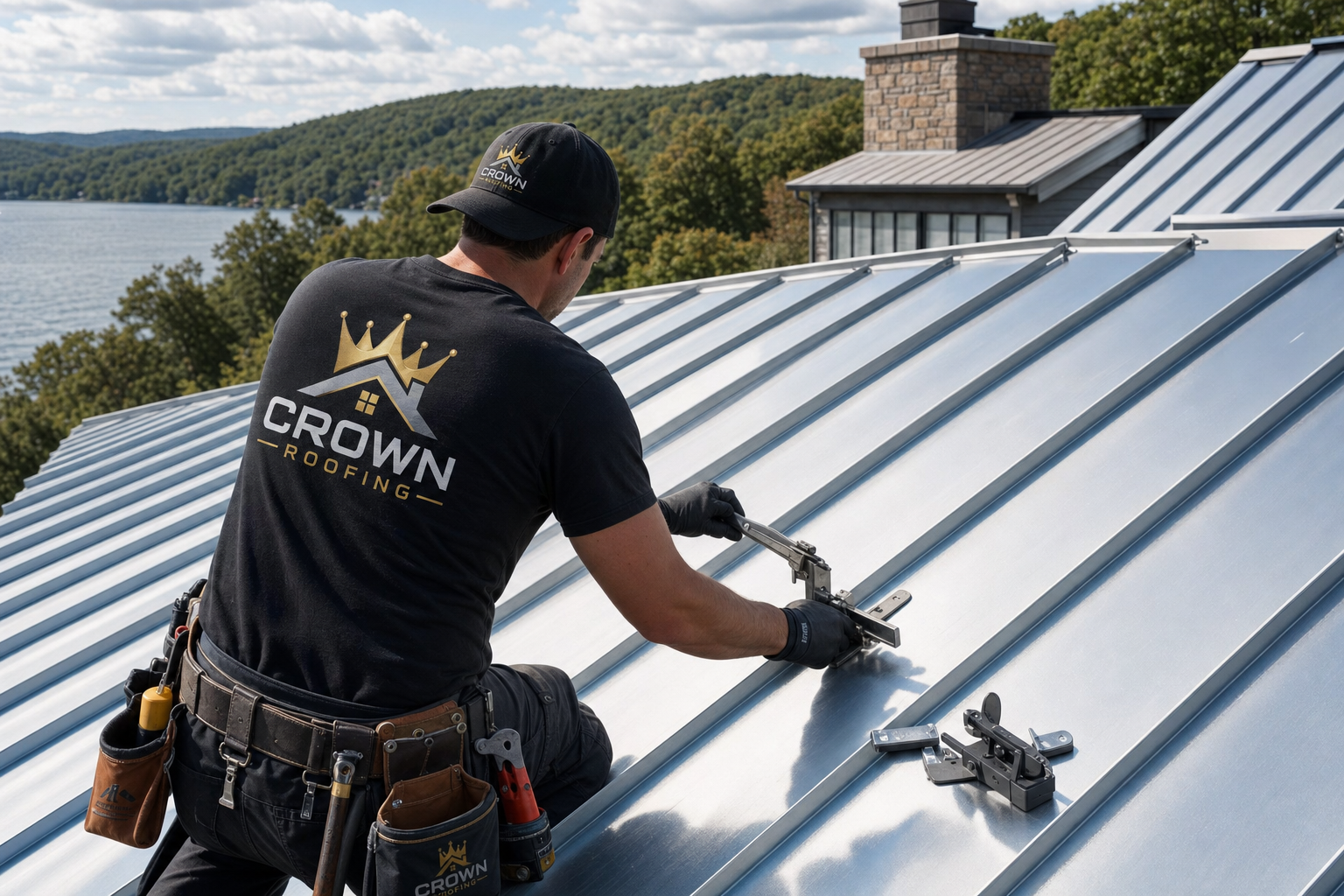
Metal Shines in Snow Country—If Details Are Done Right
Standing seam metal roofs shed snow and ice dramatically on steep pitches—exactly what many Connecticut lakefront and hillside homes need. Factory-coated panels often outlast two shingle cycles, and weight is lighter than slate or tile. But metal is not magic: chimney transitions, valley details, and snow avalanche risk at walkways require planning before panels go on.
Coastal Fairfield and Norwalk properties add salt-air corrosion concerns at exposed edges. Inland Danbury and Litchfield Hills homes face freeze-thaw at every penetration. This guide covers real-world pros and cons, winter performance, lifecycle cost, and what skilled installation looks like at chimneys and headwalls—where cheap shortcuts fail within seasons, not decades.
Quick Answer
Quality metal roofs shed snow and ice well when installed with correct underlayment and flashing. Upfront cost is higher than shingle, but lifecycle cost favors long-hold properties with maintained coatings and fasteners.
Advantages
- Excellent snow shed on steep pitches
- Long lifespan with factory-coated panels
- Lightweight vs slate and concrete tile
- Works well on lakefront and open-exposure homes
Considerations
- Higher upfront cost than asphalt shingle
- Requires skilled installation at chimneys and valleys
- Snow avalanche risk may need snow guards above entries
- Oil-canning visible on long flat pan runs if substrate uneven
Lifespan in Connecticut Winters
Standing seam systems often exceed 40 years when flashings are maintained. Coastal properties in Fairfield and Norwalk need compatible metals at salt-exposed edges. See metal roofing services.
Snow Guards and Walkways
Homes above driveways and entries in hilly Redding or New Milford should plan snow retention. Shedding is a feature until a slab hits a parked car or porch railing. Guards are designed during layout—not retrofitted after the first avalanche.
Chimney and Valley Transitions
Metal shines on open gables but fails early when chimney flashings are foam-and-caulk shortcuts. Connecticut freeze-thaw cycles crack caulk within seasons—proper step flashing and counter-flashing matter more than panel brand.
Coatings and Color
Factory Kynar and similar coatings resist chalking for decades when washed occasionally. Dark colors shed snow faster but absorb more summer heat; lighter tones suit open southern exposures. Discuss thermal movement clips and panel length limits on long runs to avoid oil-canning on uneven deck.
Coastal Fairfield Considerations
Properties in Fairfield and Norwalk need compatible metals at salt-exposed edges to avoid galvanic corrosion. Fastener type and clip spacing matter in sustained wind zones along Long Island Sound.
Lifecycle Cost
Upfront cost exceeds asphalt, but one metal cycle may span two shingle replacements on long-hold homes. Pair with attic insulation upgrades during install for comfort gains. See metal roofing services for material options and inspection scheduling.
Noise, Hail, and Solar Mounts
Proper underlayment and attic insulation make rain noise comparable to other systems over a solid deck—metal is not automatically louder when assembly details are correct. Hail can dent softer metals; discuss gauge and profile if trees or golf-range exposure matter on your property. Solar mounts require flashing kits rated for metal panels; plan penetrations during design so warranty stays intact across trades.
Energy and Reflectivity
U.S. DOE — attic ventilation and insulation basics guidance on air sealing complements metal installs—panels shed snow, but heat loss still wastes energy if attic bypasses remain. Light-colored metal can reduce summer heat gain on open southern exposures in Town of Monroe, CT and Town of Brookfield, CT lake communities.
Insurance and Hail
Discuss hail and wind endorsements with your carrier before install; cosmetic metal dent coverage varies. Document product spec, gauge, and clip system for claims and resale in Fairfield County coastal zones.
Acoustics and Rain Noise
Proper deck, underlayment, and attic insulation make rain on metal comparable to shingle for most homeowners. Cathedral ceilings without attic buffer may need additional sound mat—plan during design, not after first storm.
Walkability and Future Service
Technicians servicing chimneys, skylights, and solar mounts must follow panel walk paths; improper foot traffic dents standing seam. Discuss future access with your installer if rooftop equipment is planned in City of Norwalk, CT or Town of Fairfield, CT coastal properties.
Budgeting Metal Over Two Shingle Cycles
Spread comparison over forty years: two shingle replacements plus maintenance may exceed one metal install with periodic flashing service—especially on long-hold lakefront properties in Town of Brookfield, CT where scaffold and access costs repeat on steep pitches.
Metal Roofing Services
- Metal roofing installation and repair
- Roof replacement
- New roof installation
- Inspection before material switch
- Residential roofing
Lakefront and Hillside Homes
- Brookfield · New Fairfield
- New Milford · Redding
- Fairfield · Norwalk (coastal metal details)
Energy & Coastal References
- U.S. DOE — attic ventilation and insulation basics
- Town of Fairfield, CT, City of Norwalk, CT, Town of Brookfield, CT, Town of Monroe, CT, Town of New Milford, CT
Metal as a System, Not a Panel
Panels are only part of the assembly—underlayment, clip spacing, chimney transitions, and snow retention define success in Connecticut snow country. Coastal owners should plan edge fastener inspection every few seasons; inland owners should plan for thermal movement at long panel runs. When bids differ widely, compare gauge, coating class, and flashing method—not just square-foot price.
We install and repair standing seam systems across Danbury, Brookfield, Fairfield County, and Litchfield Hills with photo-documented scopes.
U.S. DOE — attic ventilation and insulation basics air-sealing guidance pairs well with metal upgrades—shedding snow does not stop heat loss through a leaky ceiling plane. Ask installers how snow guards, pipe boots, and solar mounts are handled before panels ship.
FAQ
Steep roofs may need snow guards above walkways and entries. Plan guards during design—not after first avalanche.
Proper underlayment and attic insulation make rain noise comparable to other systems over solid deck.
Factory-coated systems with maintained flashings perform well; incompatible metals at edges cause galvanic corrosion—use rated details.
Real Connecticut Examples
New Milford homeowners above side-entry garages added snow guards after a shed slide dented a railing—panels performed perfectly; planning guards at design would have avoided the scare. Fairfield Sound-front homes need fastener schedules that account for salt—coastal edge inspections every few years catch corrosion early.
Need help with your roof in Connecticut? Contact Crown Roofing & Exteriors for a free inspection or call (475) 454-8679. We serve Danbury, Fairfield & Litchfield Counties, and 30+ cities statewide—with written scopes and photo documentation on every job.
Browse our Roofing Insights hub and Roofing Solutions catalog for more Connecticut winter guides, emergency services, and city-specific roofing pages.