
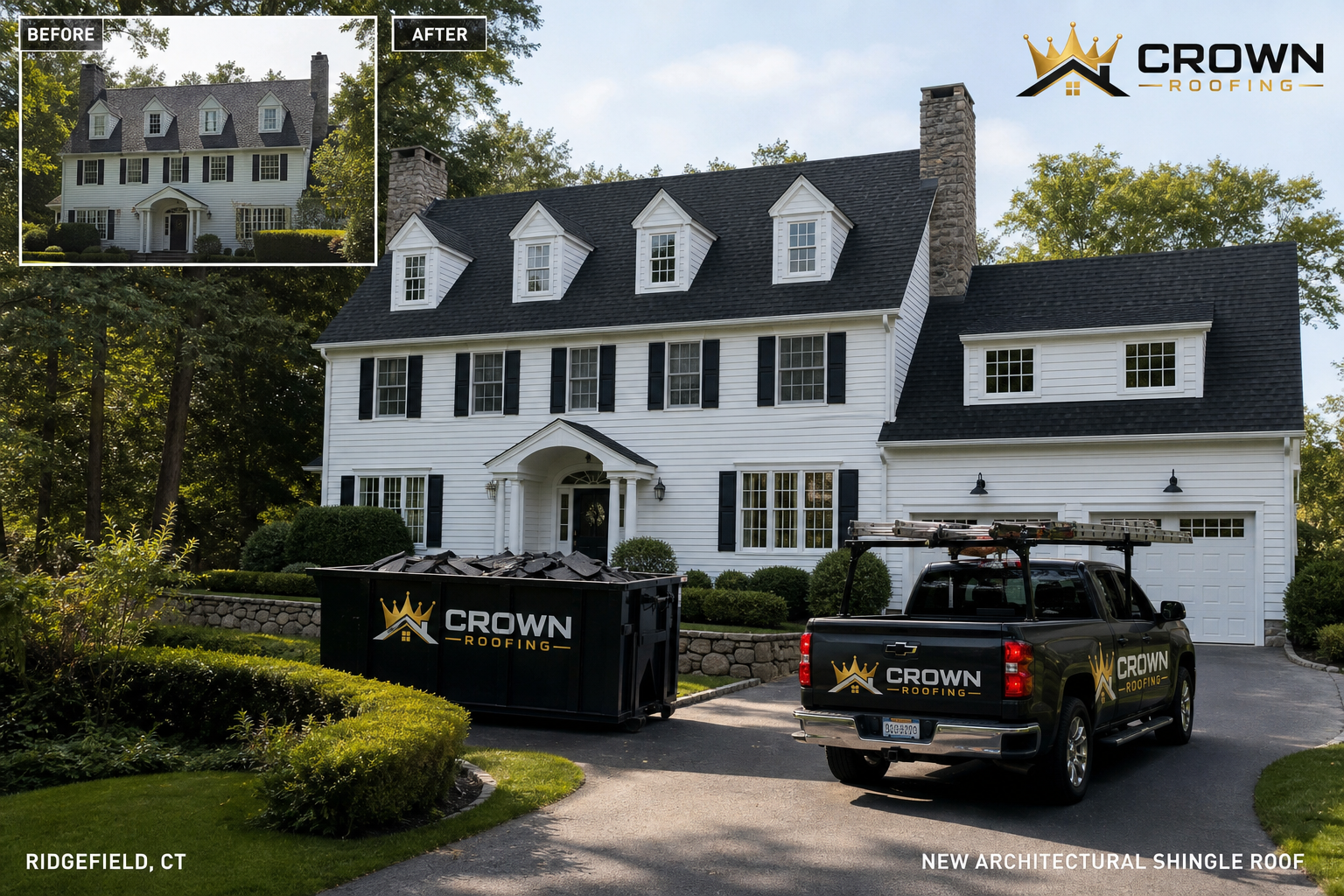
A 1980s colonial in Bethel showed classic Connecticut end-of-life signals: brittle shingle tabs, granule piles in gutters, and bedroom ceiling stains after the first January thaw. The homeowner wanted a uniform roof ready for nor'easter season—not another year of patch quotes.
The Problem
Twenty-year architectural shingles on the main roof with a prior overlay section over a 1990s family-room addition. Ice dam staining at the north eave had been patched twice without attic photos. Ridge vent installed years ago but soffit intake blocked by insulation at the addition. South slope tabs cracked under foot during inspection—localized repair was no longer economical.
Inspection Findings
Attic entry revealed moisture rings on plywood at the north eave, daylight at one chimney corner, and fiberglass insulation covering soffit vents along the addition wall. Exterior photos mapped creased tabs, exposed nail heads from high nailing on a prior repair, and deteriorated pipe boots on two plumbing vents.
- Deck soft spots limited to north eave—requiring sheet replacement
- Chimney step flashing: aged, lifted on west side
- Two layers on addition slope—town code required tear to deck
- Ventilation imbalance driving ice dam history
Recommended Solution
Full tear-off to deck on all slopes, replace damaged plywood at eaves, install ice-and-water shield at eaves and valleys, synthetic underlayment field, wind-rated architectural shingles, new drip edge and ridge vent, reflash chimney with step and counter flashing, replace all pipe boots, and install soffit baffles to restore intake path.
Materials & Specifications
Architectural shingles rated for Connecticut wind zone, ice barrier membrane, synthetic underlayment, aluminum drip edge, ridge vent with external baffles, lead or rubber-equivalent pipe boots, and chimney flashing kit. Permit pulled; inspection scheduled before final payment milestone.
Work Process
Dumpster positioned on driveway; tarps over shrubs and side entry. Tear-off and dry-in same day on each section. Deck repairs completed before ice barrier. Magnetic sweeps at end of each day. Homeowner stayed in house—noise expected, no interior access needed. Final walkthrough reviewed attic baffles and warranty registration steps.
Bethel & Connecticut Context
Bethel's Stony Hill and Plumtrees neighborhoods carry large stock of 1970s–1990s colonials with similar ice and ventilation stories. Town of Bethel, CT permit and inspection applied to this tear-off. Compare our ice dam prevention guide for why eave details matter as much as shingle brand in New England.
Result
Uniform curb appearance, balanced ventilation confirmed in post-project attic photos, and no ice dam stains through the following winter on the repaired eave section. Homeowner received digital photo packet for insurance and resale files.
Lessons for Connecticut Homeowners
Bethel colonials from the 1980s often carry overlay sections, blocked soffits, and ice history together—patching shingles without ventilation correction invites repeat stains. Full tear-off cost more upfront than overlay but removed hidden deck damage and second-layer weight.
Keep permit paperwork, warranty registration, and attic photos with your home file. Buyers and adjusters ask for documentation years later when another nor'easter hits Fairfield County.
Related Services & Pages
- Roofing contractor Bethel CT
- Related blog article
- All Connecticut service areas
- Client reviews
- Request a project estimate
Services on this project
More case studies
Local & Official Resources
- Connecticut Official State Website
- Town of Bethel, CT
- Fairfield County, Connecticut — Wikipedia overview
- Connecticut Department of Consumer Protection — contractor licensing
External links open in a new tab. Crown Roofing & Exteriors is not affiliated with municipal or state websites—we cite them for permit and consumer research context.