


Ice Dams Are a Symptom, Not the Disease
Thick icicles hanging from your gutters look dramatic, but they are usually the visible tip of a hidden problem: heat escaping into your attic, melting snow at the ridge, and refreezing at the cold eave where your overhang extends past heated space. Connecticut's combination of heavy snow, freeze-thaw cycles, and older housing stock makes ice dams one of the most common—and most misunderstood—roof issues in Fairfield and Litchfield Counties.
Heat cables and roof rakes can help in a crisis, but they do not fix blocked soffits, bath fans venting into attics, or missing ice-and-water membrane at the eave. This article walks through why dams form on Danbury colonials and Candlewood Lake homes alike, what prevention actually works, and when water damage means you need professional repair—not another season of hoping the icicles melt before the ceiling stains spread.
Quick Answer
Ice dams form when attic heat melts snow at the ridge; water refreezes at cold eaves and backs up under shingles. Fix ventilation, insulation, and waterproof details—not just the icicles you see from the street.
Why Ice Dams Form in Connecticut
Colonials and capes in Danbury often have insulated cathedral ceilings or blocked soffits that warm roof decks unevenly. Lakefront homes in Brookfield and New Fairfield see heavy snow loads that sit for weeks. When heat escapes, meltwater hits a cold eave and dams grow overnight.
Prevention Checklist
- Balance soffit intake with ridge or roof vent exhaust
- Seal attic bypasses around chimneys, lights, and top plates
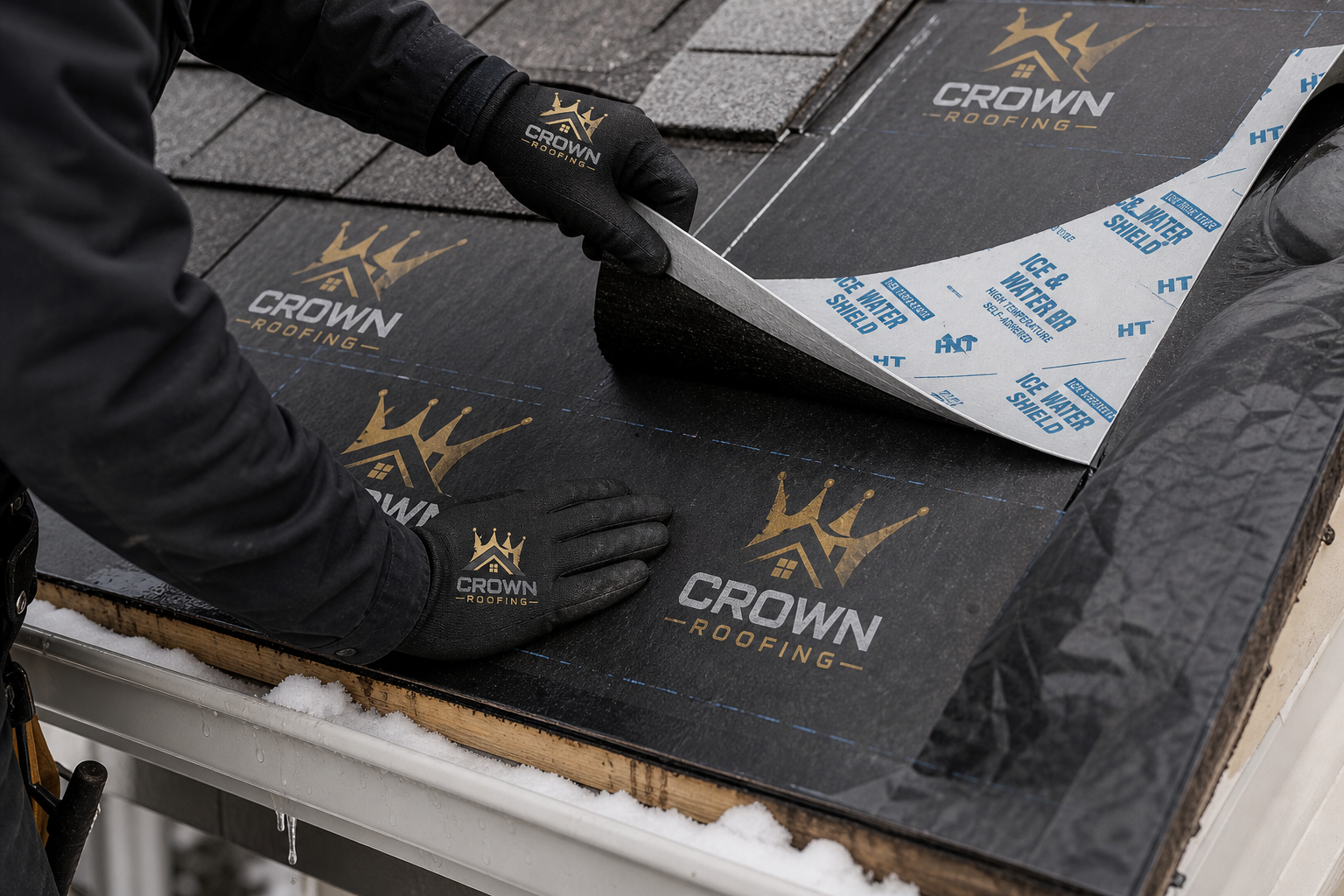
- Install ice-and-water shield at eaves during replacement
- Keep gutters clear so melt can drain when thaw arrives
- Remove heavy snow from vulnerable valleys when safe from ground
When Dams Already Caused Damage
Interior stains at exterior walls often mean water backed up at the eave, not a random field leak. See roof waterproofing and roof repair for flashing and membrane corrections. Active leaks need emergency service: (475) 454-8679.
Why the Ridge Melts First
Walk through Danbury's 1960s neighborhoods and you will see ice thick at the eave while the ridge is bare. That pattern means heat is escaping into the attic. Fixing shingles alone does not change the thermodynamics. Ridge vent without open soffit intake is a common post-renovation mistake—we see it on updated capes in Bethel and Brookfield every winter.
Insulation and Air Sealing
Connecticut code and best practice push insulation toward the attic floor, not against the roof deck, with clear air paths from soffit to ridge. Recessed lights, chimney chases, and top plates leak more heat than homeowners expect—especially in Ridgefield renovations that added living space without rebalancing ventilation.
Seal bypasses before adding insulation depth. Blowing cellulose over unsealed openings moves the problem, it does not fix it.
Soffit Baffles and Intake
Insulation creeping into soffit cavities blocks intake air. Foam baffles keep a channel open so cold air washes the underside of the deck evenly. Without them, ridge vents pull from the attic floor instead of the eave— and ice dams persist despite "new ventilation."
Lake-Effect Snow Loads
Candlewood Lake properties in Brookfield and New Fairfield hold deep snow longer than open exposures along I-84. More snow means more meltwater when attic heat is unbalanced. Roof rake access and guarded valleys matter on long lakefront rooflines—always from ground level, never by climbing icy slopes.
Heat Cables: Supplement, Not Solution
Cables can keep channels open on problem eaves when ventilation fixes are phased—but they increase energy cost and do not stop attic heat loss. Budget for proper intake, exhaust, and ice barrier at the next replacement; use cables only where structure makes perfect balance difficult.
Codes and Best Practice in Connecticut
Modern Connecticut re-roofs typically include ice-and-water shield at eaves and valleys per manufacturer and municipal requirements. Town building departments—from City of Danbury, CT to City of Stamford, CT—may require permits for full replacement; ice barrier details should appear on your contractor scope before work starts.
Ventilation ratios depend on attic square footage and whether the space is conditioned. Ridge vent without functioning soffit intake creates a vacuum that pulls conditioned air through ceiling leaks, raising energy bills while still leaving cold eaves vulnerable to dams.
When to Bring in a Roofer vs Insulation Contractor
Ice dam damage at shingles and deck belongs to roofing. Pure insulation upgrades without roof symptoms may involve an energy auditor or insulation specialist—but if stains already appear, roof inspection comes first to rule out active leaks before blowing cellulose over wet decking.
Safe Snow Removal Practices
Roof rakes from ground level can reduce load above heated spaces—never stand on icy ladders or chip dams with sharp tools at shingle edges. Work parallel to the eave, leaving a thin snow cap to avoid granule damage. On multi-story homes in City of Stamford, CT or City of Danbury, CT downtown, hire professionals rather than risking fall injury for marginal rake access.
Insulation Depth Targets
Connecticut homes often target R-49 at the attic floor when air sealing is complete—but adding depth without sealing bypasses first can trap moisture. Infrared scans during blower-door tests reveal leaks that visual inspection misses; combine energy audit data with roof inspection before blaming shingles alone.
Services That Address Ice Dams
- Roof waterproofing — ice-and-water shield and flashing
- Roof replacement — eave detail upgrades during re-roof
- Roof inspection — attic ventilation assessment
- Roof repair — damage after dam backup
- Roof maintenance — fall prep before freeze
Ice Dam–Prone Communities We Serve
Authoritative Ventilation & Weather Resources
- U.S. DOE — attic ventilation and insulation basics
- City of Danbury, CT, Town of Brookfield, CT, Town of New Fairfield, CT, Town of Bethel, CT
- Connecticut Official State Website — building safety information
FAQ
Cables can help on problem eaves but do not fix poor ventilation or insulation. Treat them as supplemental, not a substitute for air-sealing.
After heavy storms when safe from ground with a roof rake—especially above heated spaces and valleys. Avoid chipping ice at shingle edges.
Not if attic heat still melts snow at the ridge. Ice barrier helps at eaves during replacement, but ventilation balance is essential.
Real Connecticut Examples
On Brookfield lakefront homes, we often see dams at valleys where two long rooflines meet and snow sits for weeks. In Ridgefield colonials, blocked soffits after new insulation without baffles are the repeat offender. Same symptom—different fix.
Need help with your roof in Connecticut? Contact Crown Roofing & Exteriors for a free inspection or call (475) 454-8679. We serve Danbury, Fairfield & Litchfield Counties, and 30+ cities statewide—with written scopes and photo documentation on every job.
Browse our Roofing Insights hub and Roofing Solutions catalog for more Connecticut winter guides, emergency services, and city-specific roofing pages.