
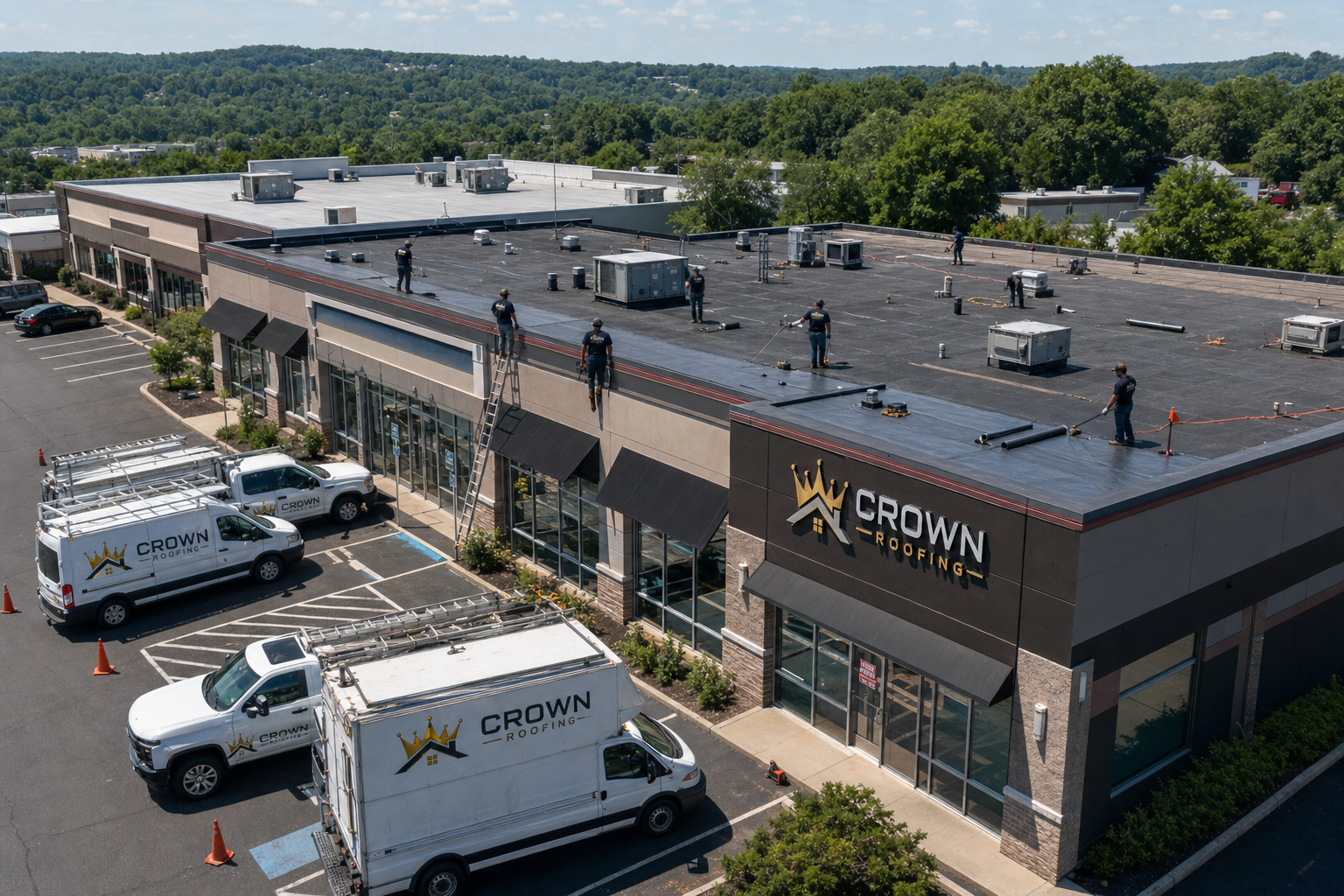

Flat Roofs Fail Quietly Until Tenants Call
Low-slope commercial roofs along Federal Road, Route 7, and Route 8 corridors do not announce problems with missing shingles visible from the street. Water ponds behind blocked drains, seams open after HVAC service, and ice dams form at scuppers until a tenant reports a ceiling stain on a Monday morning.
Property managers who document quarterly drain checks and post-storm walk-throughs avoid most emergency premiums—and most angry lease conversations. This checklist covers what to inspect before freeze season, how to coordinate with rooftop vendors, and when membrane age means capital planning beats another year of patch-and-pray.
Quick Answer
Quarterly drain checks, pre-winter inspection, and post-storm reviews prevent most tenant leaks on low-slope buildings along Federal Road and Route 7.
Maintenance Checklist
- Clear roof drains and scuppers before freeze season
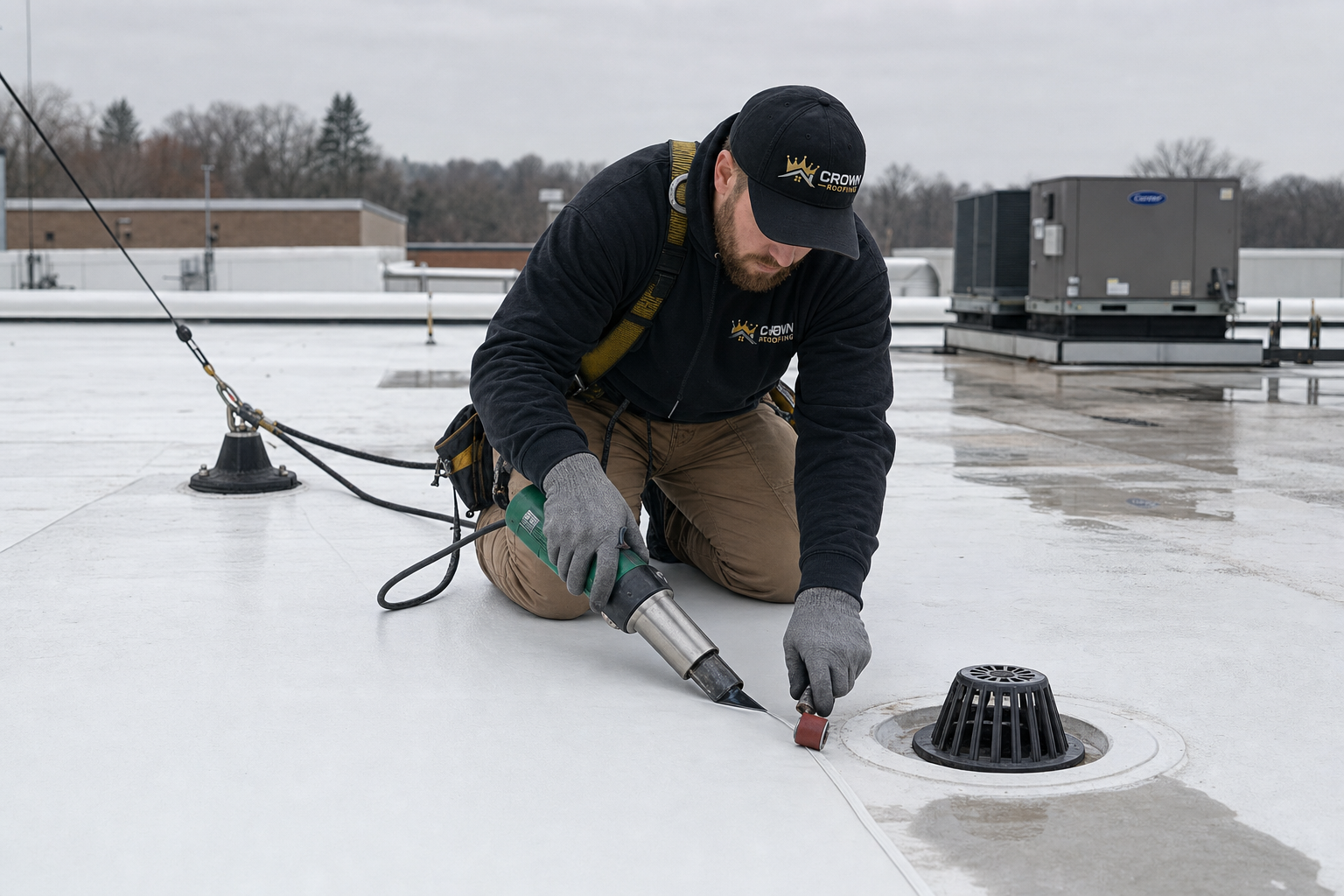
- Inspect seams within 5 feet of HVAC curbs
- Verify walk pad paths to rooftop units
- Photo-log membrane condition twice yearly
- Check ponding areas before spring coating bids
For Property Managers
Document tenant leak reports with roof photos the same week. See commercial roofing and maintenance plans. Warehouse roofs in Shelton and Waterbury share similar drain and seam failure patterns.
After HVAC Service
Require rooftop vendors to use walk pads and report punctures immediately. Most new commercial leaks on Federal Road retail buildings follow RTU work, not random membrane age. Add a punch-list item: photo membrane within five feet of every unit after service.
Winter Prep on Low-Slope Roofs
Clear drains and scuppers before first freeze. Ice at scuppers backs water under membrane laps on TPO and EPDM alike. Schedule fall walk-through when leaves clog strainers on buildings near Route 7 office parks and Shelton warehouses.
Tenant Communication
When inspection finds ponding or open seams, notify ownership in writing even if tenants have not complained yet. Proactive repair beats emergency interior damage and lease credit conversations.
Capital Planning
Track remaining membrane life with annual reports. Budget replacement before emergency interior damage triggers tenant credits and lost rent on Route 7 office parks. Coatings may extend select membranes after drainage fixes—they do not fix widespread lap failure.
TPO, EPDM, and Modified Bitumen
Each system fails differently: TPO at heat-welded seams near curbs; EPDM at adhesive laps and ballast punctures; modified bitumen at metal edge details. Match maintenance checklist to membrane type on your portfolio. See commercial roofing for repair and replacement scopes.
Vendor Coordination Checklist
Require signed roof protection clauses in HVAC, telecom, and solar vendor contracts. Mandate walk pads, report punctures within twenty-four hours, and prohibit loose screws left on membrane. Property managers who enforce this on Federal Road and Route 8 portfolios cut emergency calls measurably compared to buildings that treat the roof as an afterthought.
Lease Language and Roof Access
Standard Connecticut commercial leases often assign interior damage response to tenants while structural dry-in remains ownership's duty. Clarify roof access hours, notification trees, and who authorizes emergency tarping before the first leak—confusion during a January freeze adds cost and liability on both sides.
Federal Road and Route 7 Corridors
Retail and office stock along City of Danbury, CT commercial zones shares low-slope TPO and EPDM systems with similar drain failure patterns. Align maintenance calendars with leaf season and pre-winter freeze—same week each quarter reduces missed cycles.
Shelton and Waterbury Industrial Roofs
City of Shelton, CT and City of Waterbury, CT warehouse roofs see RTU punctures and ballast displacement from service traffic. Require vendor insurance certificates and roof protection addenda before any rooftop mechanical work.
Portfolio-Level Maintenance
Owners with multiple buildings along Route 7 should standardize inspection forms across sites—compare ponding depth, seam photos, and drain condition quarterly. One property with blocked scuppers predicts similar neglect on sister buildings if the same vendor maintains HVAC fleet-wide.
Lease Language on Roof Responsibility
Triple-net leases may push membrane replacement to tenants while structure stays with landlord—know who authorizes capital spend before emergency patches stack up without long-term fix.
Manufacturer Warranty on Commercial Membranes
TPO and PVC warranties often require documented maintenance visits—file quarterly reports or risk voided coverage when a seam fails during a January freeze on a City of Shelton, CT warehouse roof.
Commercial Roofing Services
- Commercial roofing
- Flat roof repair
- Roof maintenance plans
- Commercial inspection
- Waterproofing and seams
Commercial Corridors
Business & Property Resources
- City of Danbury, CT, City of Shelton, CT, City of Waterbury, CT, City of Stamford, CT, City of Norwalk, CT
- Connecticut Department of Consumer Protection — contractor licensing
- Fairfield County, Connecticut — Wikipedia overview
Maintenance Is Cheaper Than Tenant Credits
One prevented leak avoids drywall, inventory loss, and lease abatement conversations that cost far more than quarterly walk-throughs. Standardize vendor rules, drain schedules, and photo logs across your portfolio—especially on Route 7 and Federal Road properties where HVAC traffic is heavy.
Crown Roofing & Exteriors supports Danbury-area property managers with maintenance plans, inspection PDFs, and capital planning notes for board presentations.
Register maintenance visits with membrane manufacturers where required—voided warranties turn small seam failures into full capital events. Align quarterly walk-through dates with HVAC filter swaps so rooftop checks become routine, not forgotten.
Related: commercial roofing, flat roof repair, and maintenance plans for Danbury portfolios.
Preventive maintenance is a capital decision—one avoided tenant leak often pays for a year of quarterly inspections on Route 7 retail stock.
Schedule a walk-through before freeze season—waiting for the first tenant call costs more every time.
FAQ
Lease terms vary—document notifications to ownership and mitigation steps taken the same day.
Quarterly on most Danbury commercial roofs; more often near deciduous trees or rooftop HVAC debris.
Scheduled walk-throughs rarely require tenant access; interior leak follow-ups need coordination only when tracing active water.
Real Connecticut Examples
A Federal Road retail strip avoided tenant leaks for three winters after quarterly drain cleaning and post-HVAC photo logs—previous vendor punctures were caught the same week as service, not months later at first rain.
Waterbury warehouse roofs on the same maintenance schedule reported zero emergency interior calls last ice season—compared to three on a neighboring building that skipped fall drain clearing.
Need help with your roof in Connecticut? Contact Crown Roofing & Exteriors for a free inspection or call (475) 454-8679. We serve Danbury, Fairfield & Litchfield Counties, and 30+ cities statewide—with written scopes and photo documentation on every job.
Browse our Roofing Insights hub and Roofing Solutions catalog for more Connecticut winter guides, emergency services, and city-specific roofing pages.