

Why Repair vs Replacement Is Harder in Connecticut
Homeowners across Danbury, Bethel, and Ridgefield call us every winter with the same question: can we patch it, or is the whole roof finished? The honest answer is rarely visible from the street. Connecticut roofs fail in predictable patterns—ice backing up at cold eaves, wind lifting ridge caps during nor'easters, brittle asphalt tabs after twenty years of freeze-thaw—but every house mixes those factors differently.
A bedroom stain after the first thaw might mean a failed pipe boot, an ice dam at the eave, or a roof that has simply reached end of life. Guessing costs money: a cheap patch before a February storm often leads to soaked insulation, mold in a cold attic, and a replacement quote that should have happened in October. This guide explains what we look for during inspection, how local weather changes the math, and when documentation helps with insurance or a home sale.
Quick Answer
Repair when damage is isolated and the system has remaining life. Replace when decking is soft, shingles are brittle across slopes, or repeated leaks return after prior fixes.
Signs Repair May Be Enough
- One leak path tied to a visible failed boot or slipped flashing
- Storm damage limited to one slope or small area
- Roof under 20 years with sound decking and balanced ventilation
- Ice dam staining with intact shingles away from the eave edge
Signs Replacement Is Smarter
- Multiple interior stains after different winter storms
- Widespread granule loss or brittle shingle tabs across south and west slopes
- Soft deck or daylight through attic decking
- Two or more repair cycles in five years on the same leak path
Connecticut Factors
Freeze-thaw cycles along I-84 and Route 7 stress asphalt seal strips faster than mild-climate labels suggest. North-facing eaves in Danbury and Bethel hold snow longer, which feeds ice dams when attic heat escapes. Insurance may favor replacement after documented nor'easter damage when repair thresholds are exceeded—photograph everything either way.
What to Do Next
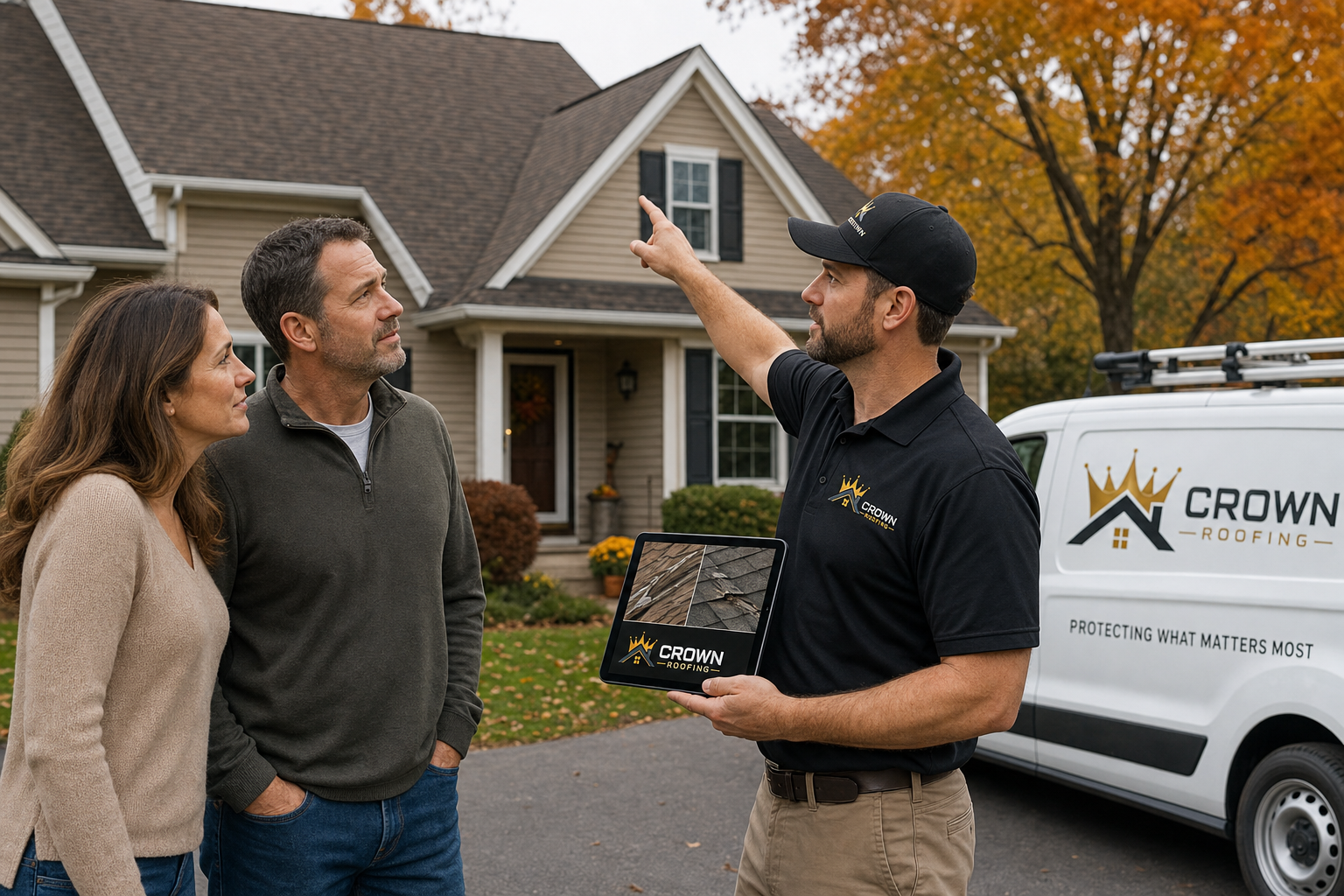
Schedule a roof inspection before guessing. Crown Roofing & Exteriors provides photos and honest guidance. Call (475) 454-8679 or request an estimate.
Ice Dams vs Shingle Age: Two Different Problems
Danbury colonials along Kennedy Avenue often show ceiling stains at exterior walls after the first serious thaw—not because field shingles failed, but because ice backed up at the eave. A roofer who quotes shingle repair without attic photos may miss the real mechanism. Conversely, a 22-year-old architectural shingle roof with brittle tabs across west slopes may need replacement even if only one bedroom shows a stain today.
We photograph both the exterior failure point and the attic path water traveled. That pairing tells us whether you need targeted waterproofing at eaves and valleys or a full replacement with corrected ventilation.
What a Proper Inspection Includes
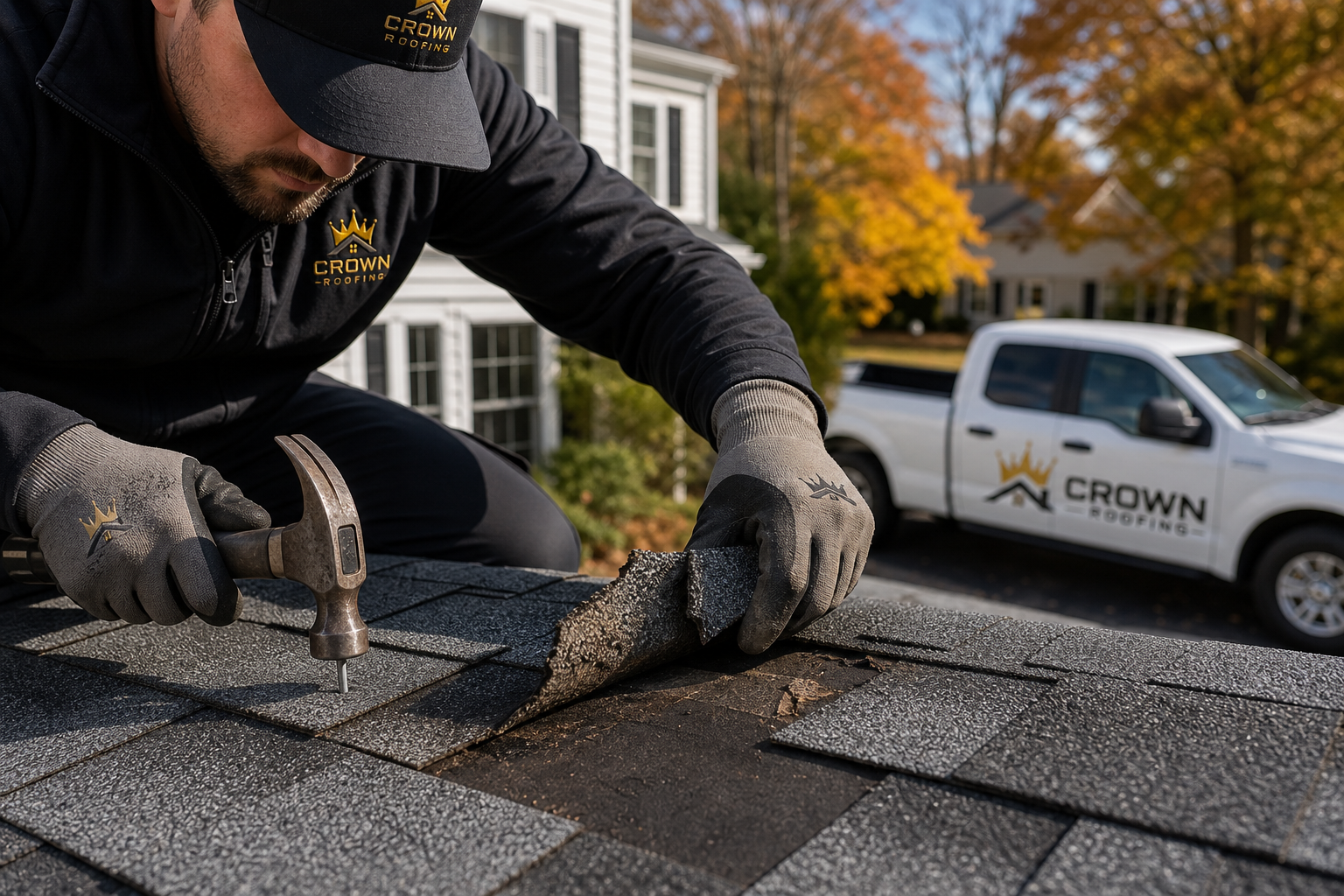
Ground photos miss lifted ridge caps and slipped flashing. We walk the roof when safe, check pipe boots and chimney steps, and enter the attic looking for daylight, moisture staining, and compressed insulation that signals heat loss. On flat porch tie-ins common in Monroe and Danbury split-levels, we probe membrane seams and transitions to the main slope.
You should receive written findings—not a verbal "you need a new roof" without pictures. Compare that documentation if you get a second opinion or involve an adjuster after storm damage.
Cost Framing Without Guesswork
Repair estimates should identify the failure mechanism: boot, valley, chimney, or systemic age. Replacement estimates should list tear-off depth, deck repair allowance, ice-and-water details at eaves and valleys, ridge vent upgrades, and permit expectations for your town. Compare bids on scope, not just bottom line—a cheap patch before a February nor'easter often costs more when drywall and insulation saturation follow.
Repair Before Selling in Danbury?
Buyers and lenders increasingly request roof documentation in Fairfield County transactions. A documented repair with photos and remaining-life notes may satisfy inspection concerns when the system has five to ten years left. Widespread brittleness or active leaks often push sellers toward replacement for clean closing—or a credit negotiation you could avoid with fall inspection.
Insurance and Ice Damage
Coverage varies by policy and whether damage is sudden versus long-term neglect. We document what we see—lifted shingles after a named wind event, ice dam intrusion after a documented freeze—without inventing damage. Your adjuster interprets coverage; our photos support an honest claim file when repair thresholds are exceeded.
Western Connecticut Roof Stock
Homes along I-84 from Waterbury toward Danbury often carry two or three layers of asphalt from decades of overlay work. That history matters: code may allow only one recover before tear-off is required, and hidden deck rot under old felt is common in 1950s capes. In Ridgefield and Redding, larger roof areas and complex valleys mean a localized repair on one dormer may still warrant full replacement when sister slopes show matching age and granule loss.
Coastal Fairfield County adds wind-driven rain testing at headwalls that inland Danbury ranches rarely see. A repair strategy that works on a Bethel split-level may fail on a Fairfield colonial facing Long Island Sound unless flashing design accounts for sustained gusts.
Documentation That Protects You
Before approving work, ask for dated photos of every slope, close-ups of boots and chimneys, and attic images showing deck condition and moisture paths. Store PDFs with your home insurance file. When you sell, buyers' inspectors re-open the same questions—clear documentation shortens negotiations.
If storm damage is involved, separate pre-storm maintenance notes from post-event findings. Adjusters distinguish sudden wind or ice intrusion from deferred upkeep; honest documentation helps both legitimate claims and repair-only decisions.
Best Season for Repair vs Replacement in Connecticut
Fall remains the ideal window for replacement: shingles seal before sustained cold, ice barrier installs cleanly, and crews are not on emergency rotation. Winter repairs on active leaks are necessary but material flexibility drops in freezing temps—plan permanent work when forecasts allow. Spring inspections after melt reveal ice dam damage that was hidden under snow; summer is fine for replacement but attic heat makes crew scheduling harder on dark shingles.
Related Crown Roofing & Exteriors Services
- Roof repair in Danbury — targeted fixes with photo documentation
- Roof replacement — full tear-off scopes with ice barrier details
- Roof inspection — repair-vs-replace recommendation before you commit
- Storm damage repair — post-nor'easter documentation
- Emergency roof repair — active leak stabilization
Connecticut Service Areas
- Roofing contractor Danbury CT
- Roofing contractor Ridgefield CT
- Roofing contractor Bethel CT
- Roofing contractor Brookfield CT
- Roofing contractor Fairfield CT
- All Connecticut cities we serve
Connecticut & Local Resources
- Connecticut Official State Website
- Connecticut Department of Consumer Protection — contractor licensing — verify contractor registration
- City of Danbury, CT, Town of Ridgefield, CT, Town of Bethel, CT
- Fairfield County, Connecticut — Wikipedia overview and Litchfield County, Connecticut — Wikipedia overview — regional context
FAQ
Inspectors flag concerns; a roofing contractor with attic access and moisture notes makes the repair-or-replace recommendation.
Sometimes—buyers and lenders increasingly request roof documentation. A documented repair may suffice if remaining life is clear.
Coverage varies by policy and whether damage is sudden vs long-term neglect. We document what we see; your adjuster interprets coverage.
Real Connecticut Examples
Last season we inspected a Mill Plain cape with a single bedroom stain after January thaw. Attic photos showed ice dam staining at the north eave but sound shingles elsewhere—a targeted eave detail and ventilation baffle fix solved it without replacement. Two streets over, a similar-looking stain on a twenty-four-year-old architectural shingle roof came with brittle tabs on three slopes; replacement was the honest recommendation.
That contrast is why we will not quote from satellite photos alone. Danbury roofing contexts vary block by block.
Need help with your roof in Connecticut? Contact Crown Roofing & Exteriors for a free inspection or call (475) 454-8679. We serve Danbury, Fairfield & Litchfield Counties, and 30+ cities statewide—with written scopes and photo documentation on every job.
Browse our Roofing Insights hub and Roofing Solutions catalog for more Connecticut winter guides, emergency services, and city-specific roofing pages.