

Nor'easters Test Roofs Differently Than Summer Storms
Connecticut nor'easters combine sustained wind, driving rain, heavy wet snow, and rapid freeze-thaw cycles in a single event. That is harder on roofs than a summer thunderstorm that blows through in an hour. Shingle seal strips stiffen in cold; ice forms under lifted edges overnight; branches snap onto low-slope porch sections that were already aging.
The first forty-eight hours after a major storm matter. Safety, documentation, and temporary dry-in protect your home and your insurance claim. This guide covers what to do from ground level, when emergency tarping is appropriate, how to avoid storm-chaser scams, and how to move from stabilization to permanent repair with a Connecticut contractor who will still answer the phone next winter.
Quick Answer
Ensure safety, document wind and ice damage, prevent interior damage with tarps if needed, then schedule professional inspection before the next freeze or rain event.
Safety First
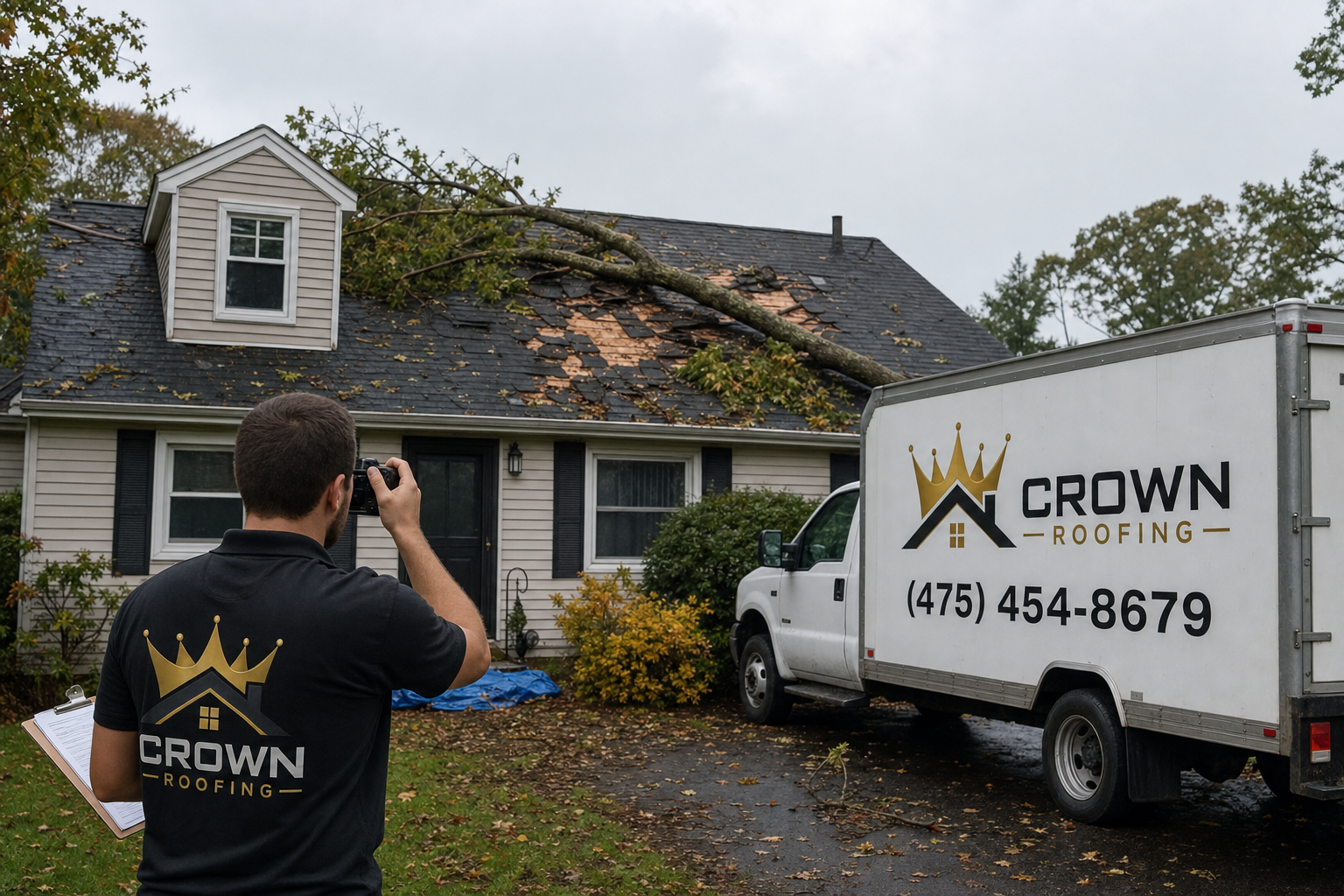
Do not climb icy or wet roofs. Stay clear of downed lines and hanging branches. Photograph missing shingles, lifted edges, ice dam lines, and interior stains from ground level or safe vantage points.
Document for Insurance
Date-stamped photos of lifted ridge caps, torn flashing, and debris impact help adjusters. We provide inspection reports without inventing damage—only what we can verify on the roof and in the attic.
Emergency Stabilization
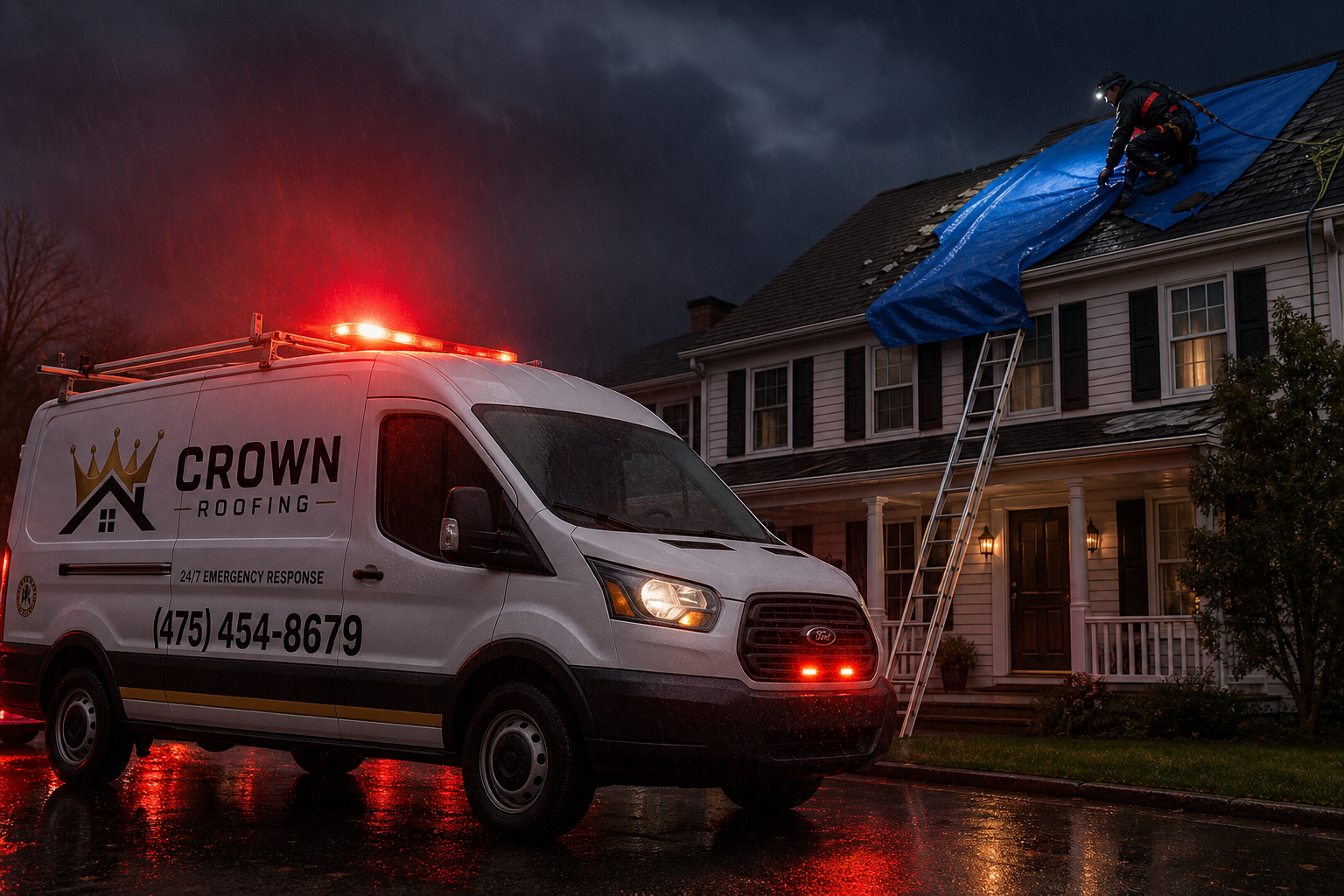
Emergency tarping stops mold growth in cold, damp attics. Call (475) 454-8679 for active leaks during or after a storm.
Permanent Repair
Match materials to Connecticut wind and ice exposure where replacement is required. See our storm damage repair service page and Ridgefield roofing for hillside wind exposure.
First 48 Hours After a Nor'easter
Day one: Ensure family safety; stay clear of downed lines and hanging branches. Photograph missing shingles, lifted edges, ice lines, and interior stains from ground level or through windows—date-stamped if your phone allows.
Day two: If rain or thaw is forecast, call for emergency tarping when active leaks threaten ceilings or electrical areas. Interior buckets and tarps on furniture remain appropriate while you wait.
Day three: Schedule professional inspection before signing with out-of-state crews who may not honor warranty work later. Permanent repair can wait for dry conditions; uncontrolled water cannot.
Tree Impact and Punctures
Branch strikes often puncture shingles and deck in valleys or flat porch sections where impact is invisible from the street. Even small punctures widen with freeze-thaw until the next rain. Document impact points and avoid walking under damaged overhangs until assessed.
Avoid Storm Chaser Red Flags
High-pressure door knocking, requests for large upfront cash, promises to waive deductibles illegally, and refusal to provide Connecticut licensing or insurance certificates are warning signs. Choose contractors who document scope clearly, pull permits when required, and show recent Fairfield or Litchfield County references.
Moving to Permanent Repair
Match materials to wind and ice exposure. Coastal homes may need higher wind-rated shingles and corrosion-aware flashing; inland hillsides need secure ridge and valley metal for sustained gusts. See our storm damage repair page for scope examples after documentation is complete.
Understanding Nor'easter Mechanics
NOAA — Northeast winter storm resources tracks coastal flooding and wind fields that affect Fairfield and New Haven counties differently than inland Litchfield Hills. Sustained onshore flow drives rain sideways into gable ends; inland areas see heavy wet snow load without the same salt exposure.
FEMA — Connecticut disaster information publishes state-level disaster guidance when federal declarations occur—not every nor'easter qualifies, but knowing the process helps if widespread damage hits your town.
Town Response and Permits
After major events, City of Bridgeport, CT, Town of Fairfield, CT, and City of Norwalk, CT often issue debris and safety advisories on official city sites. Permanent repair may require building permits; confirm with your municipality before re-roofing in storm-damaged neighborhoods.
Working With Adjusters After a Nor'easter
Submit date-stamped exterior and interior photos, your contractor's inspection report, and receipts for tarps or emergency dry-in. Adjusters may visit weeks later—do not discard damaged materials they need to see until documented. Town of Fairfield, CT and City of Bridgeport, CT coastal homes should note wind direction during peak gusts; inland City of Danbury, CT claims may emphasize ice weight and branch impact instead.
Temporary vs Permanent Timeline
Tarping can last weeks if installed correctly, but UV degrades plastic quickly in spring sun. Schedule permanent repair before another nor'easter cycle—lifted edges under tarps still admit driven rain.
Power Outages and Roof Access
Generator exhaust and improper indoor heating during outages can increase attic moisture while roof damage admits water—double stress on ceilings. When power returns, inspect attic for new staining before assuming the leak stopped with the rain.
Storm Response Services
- Emergency roof repair
- Storm damage roof repair
- Post-storm roof inspection
- Roof leak repair
- Replacement after major damage
Coastal and Inland Storm Exposure
Storm Preparedness Links
- NOAA — Northeast winter storm resources
- FEMA — Connecticut disaster information
- CT DEEP — storm preparedness
- Town of Fairfield, CT, City of Norwalk, CT, City of Bridgeport, CT, City of New Haven, CT, City of Danbury, CT
Plan Before the Next Storm
Connecticut sees multiple nor'easter cycles each winter—treating the first as a one-time event leads to repeat emergency calls. After permanent repair, photograph completed flashings and store contractor scope with your insurance file. Trim overhanging branches that scraped shingles during the last event; they will contact the roof again on the next gust. If your town posted storm debris guidance on its official website, follow collection schedules so damaged siding and soffit materials do not trap moisture against the structure while waiting for pickup.
Crown Roofing & Exteriors serves Fairfield and Litchfield Counties with storm documentation, emergency tarping, and permanent repair. Compare our written scope to any other bid—you deserve line-item clarity before the next system rolls up the coast.
FAQ
Interior containment is always appropriate; roof tarping belongs to professionals on icy or wet surfaces.
Reasonable mitigation is usually expected; keep receipts and photos of damage and temporary dry-in.
Within days if another storm is forecast—freeze-thaw cycles widen small punctures quickly.
Real Connecticut Examples
After the December nor'easter cycle, Ridgefield hillside homes saw ridge cap lift from sustained gusts while Danbury valleys collected ice that hid punctures from fallen branches. Documentation for both patterns helped homeowners file complete claims—not just the obvious missing tab.
Need help with your roof in Connecticut? Contact Crown Roofing & Exteriors for a free inspection or call (475) 454-8679. We serve Danbury, Fairfield & Litchfield Counties, and 30+ cities statewide—with written scopes and photo documentation on every job.
Browse our Roofing Insights hub and Roofing Solutions catalog for more Connecticut winter guides, emergency services, and city-specific roofing pages.