
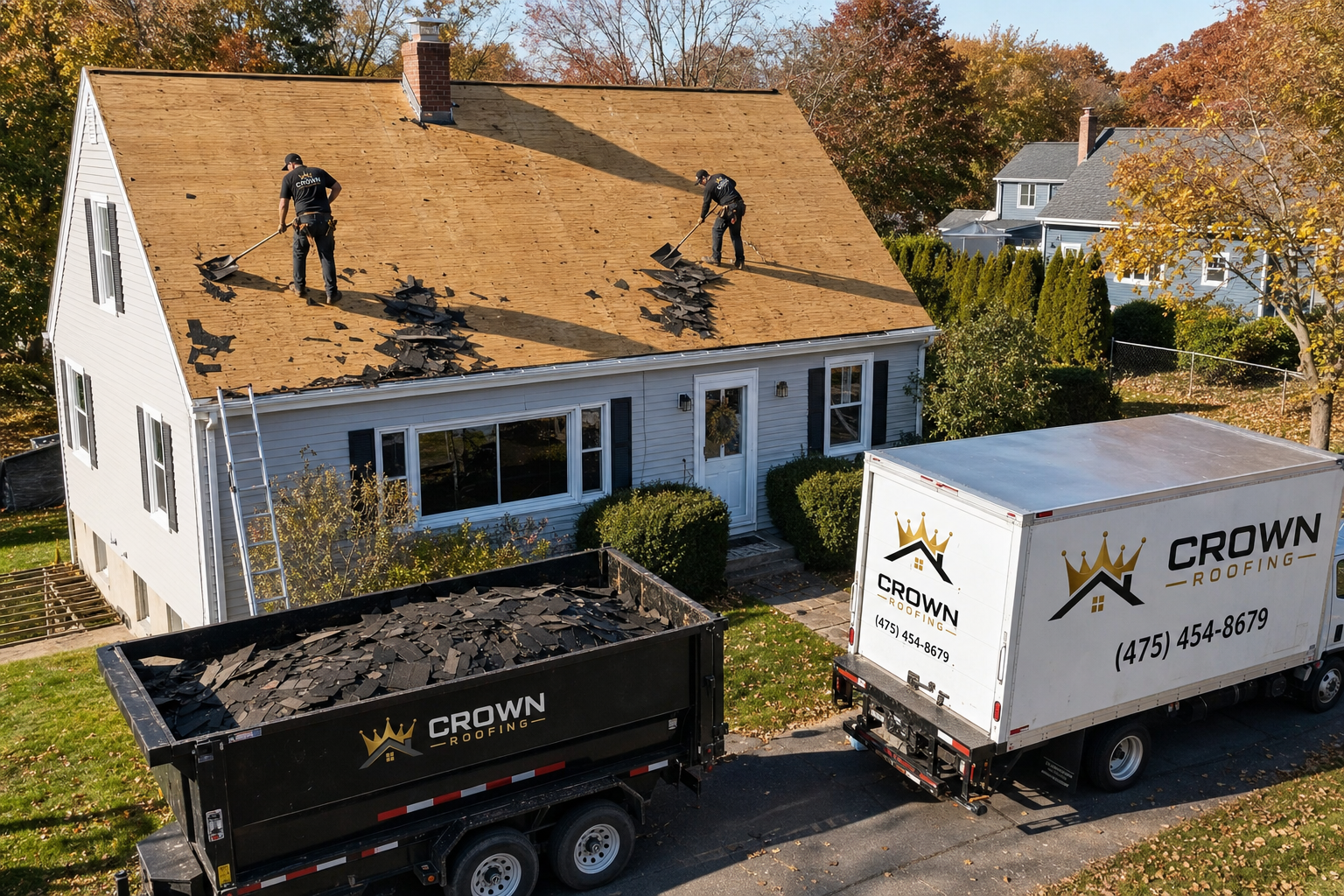

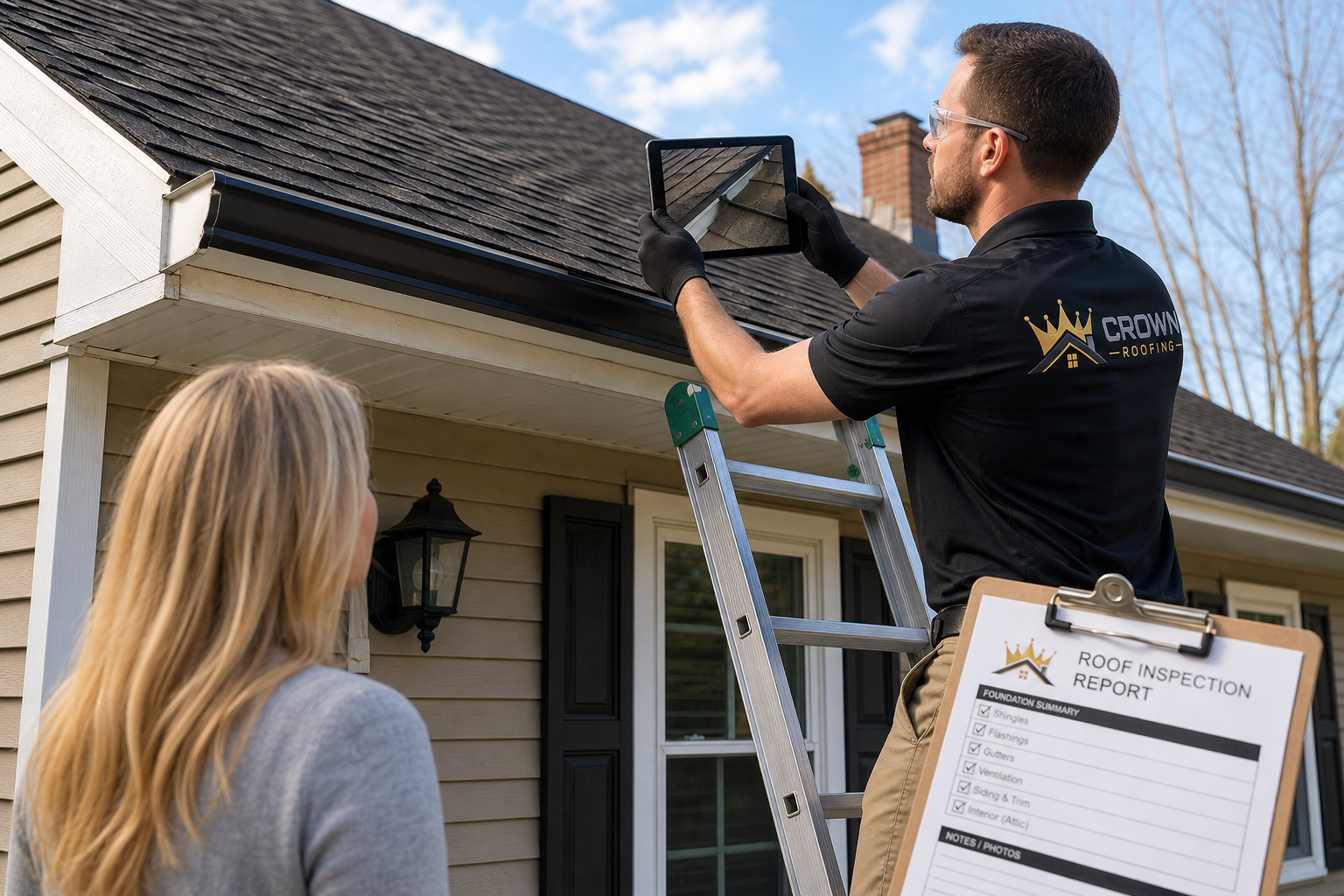
National Averages Lie About Connecticut Roof Life
Shingle labels say "30 years" in marketing copy written for mild climates. Connecticut adds freeze-thaw, ice dams, nor'easter wind, and coastal salt that compress real-world lifespan—especially when attics run hot and eaves lack ice-and-water membrane. Slate and metal can last generations; asphalt and flat membranes need honest maintenance schedules.
Install year alone does not tell you remaining life. Attic moisture, deck softness, granule loss on south slopes, and repeated leak paths matter more. This guide gives realistic ranges by system type, signs to watch by decade, and when inspection beats guessing before you buy, sell, or defer another season.
Quick Answer
Lifespan depends on material, ventilation, and maintenance—not national averages. Connecticut winters compress asphalt life when attics run hot and eaves lack ice barrier.
Typical Ranges
| System | Common Connecticut Range | Notes |
|---|---|---|
| Architectural shingle | 18–25 years | Ventilation and north eaves matter |
| Natural slate | 75–100 years | Flashing maintenance critical |
| Standing seam metal | 40–60+ years | Coastal edge care on Sound-front homes |
| TPO/PVC flat | 15–25 years | Drainage and ice on scuppers |
Extend Service Life
Maintenance and prompt repairs beat deferring until emergency premiums in January. Danbury roofing inspections clarify remaining life before you buy or sell.
Why National Averages Mislead
Manufacturer labels assume temperate climates. Connecticut freeze-thaw, ice dams, and coastal wind compress life for asphalt and underlayment products. Treat ranges as planning guides, not guarantees.
Signs by Age Bracket
Years 0–10: Usually detail failures—boots, flashing, storm damage—not field wear. Years 10–20: Granule loss accelerates on south and west slopes; first ice dam stains may appear if ventilation is poor. Years 20+: Brittle tabs, widespread curling, and repeated leak paths often mean replacement is smarter than patch three.
Flat vs Pitched Life
Low-slope porch and commercial membranes fail at drains and seams first—often before visible age on pitched slopes above. Inspect both independently on mixed buildings common along I-84 corridor.
Inspect, Do Not Assume
Attic moisture, deck softness, and core samples on flat sections tell truth better than install year alone. Schedule professional inspection before winter or a home purchase in Litchfield Hills.
Resale Disclosures
Sellers with roofs past twenty years should expect buyer inspection scrutiny. Documentation of remaining life or recent replacement smooths closing in Danbury and coastal Fairfield markets alike.
Manufacturer vs Workmanship Warranty
Shingle manufacturer warranties assume correct install, ventilation, and transfer paperwork at sale. A roof that fails at year eighteen may still have material coverage—or none if install was non-compliant. Keep invoices, scope documents, and ventilation specs with home records; buyers and adjusters ask for them.
Budget Planning by Age
If your roof is past year fifteen, start a replacement reserve even when no leak is active—Connecticut winters convert deferred maintenance into emergency premiums with interior damage attached. Fall quotes beat January scramble pricing when crews are already on emergency rotation.
Climate Zones Within Connecticut
Litchfield County, Connecticut — Wikipedia overview inland hills see longer snow cover than City of Bridgeport, CT waterfront—membrane and shingle aging differ on the same calendar age. City of New Haven, CT urban heat island effect can shorten asphalt life on poorly vented triple-deckers.
Keep a Roof History File
Log install year, contractor, material spec, permit number from City of Danbury, CT or your town, and every inspection PDF. Buyers and insurers trust paper trails when remaining life is disputed.
Warranty Transfer at Sale
Manufacturer warranties on architectural shingles may transfer once if paperwork is filed within required days of closing—missing transfer voids coverage buyers assume exists. Keep install invoice, scope, and ventilation spec in closing packet.
Overlay History Shortens Life
Second-layer roofs trap heat and hide deck rot; remaining life on overlays in City of Waterbury, CT triple-deckers is often half of single-layer systems the same age.
Flat vs Pitched on Mixed Buildings
Strip malls and mixed-use buildings in City of Stamford, CT and City of Bridgeport, CT may replace pitched storefront shingles while neglecting rear flat membranes—inspect both when judging whole-property roof age.
Plan Your Next Roof
Urban to Rural Connecticut
Climate & Registry Resources
- Fairfield County, Connecticut — Wikipedia overview · Litchfield County, Connecticut — Wikipedia overview
- City of Danbury, CT, City of Bridgeport, CT, City of New Haven, CT, City of Torrington, CT
- U.S. DOE — attic ventilation and insulation basics
Plan From Evidence, Not Labels
Marketing lifespans assume ideal climates; Connecticut adds freeze-thaw, ice, and coastal wind. Track your roof like any major system—inspect at year fifteen, budget early, and keep paperwork for warranty transfer. Mixed flat and pitched buildings need separate age assessments.
Remaining-life inspection clarifies whether this season is for maintenance, repair, or replacement—before weather chooses for you.
Town assessor and building records in City of Danbury, CT and City of Bridgeport, CT sometimes note permit years—cross-check against visual inspection for planning. Budget replacement reserves when inspection shows year eighteen or older on architectural shingle with attic moisture signs.
Related: shingle roofing, metal roofing, and remaining-life inspection.
Plan replacement before emergency pricing—Connecticut winters convert deferred roofs into interior damage claims faster than mild-climate timelines suggest.
Ask for remaining-life notes in writing—verbal guesses do not help buyers, lenders, or adjusters.
FAQ
Often less without ventilation and maintenance—treat label ratings as ideal-climate marketing.
Generally no for widespread aging shingles; coatings suit select flat membranes after drainage fixes.
When inspection shows brittle tabs, widespread granule loss, or repeated leak paths—often years before total failure.
Real Connecticut Examples
A nineteen-year shingle roof in Monroe looked fine from the street; attic decking showed moisture rings and soft spots at north eaves—remaining life was measured in seasons, not the marketing "30-year" label implied.
Torrington industrial buildings with EPDM past year twenty often need drain upgrades before coating bids—membrane age and ponding history tell more than install date on the lease file.
Need help with your roof in Connecticut? Contact Crown Roofing & Exteriors for a free inspection or call (475) 454-8679. We serve Danbury, Fairfield & Litchfield Counties, and 30+ cities statewide—with written scopes and photo documentation on every job.
Browse our Roofing Insights hub and Roofing Solutions catalog for more Connecticut winter guides, emergency services, and city-specific roofing pages.