

A Leak in January Is an Emergency—Not a Wait-for-Spring Problem
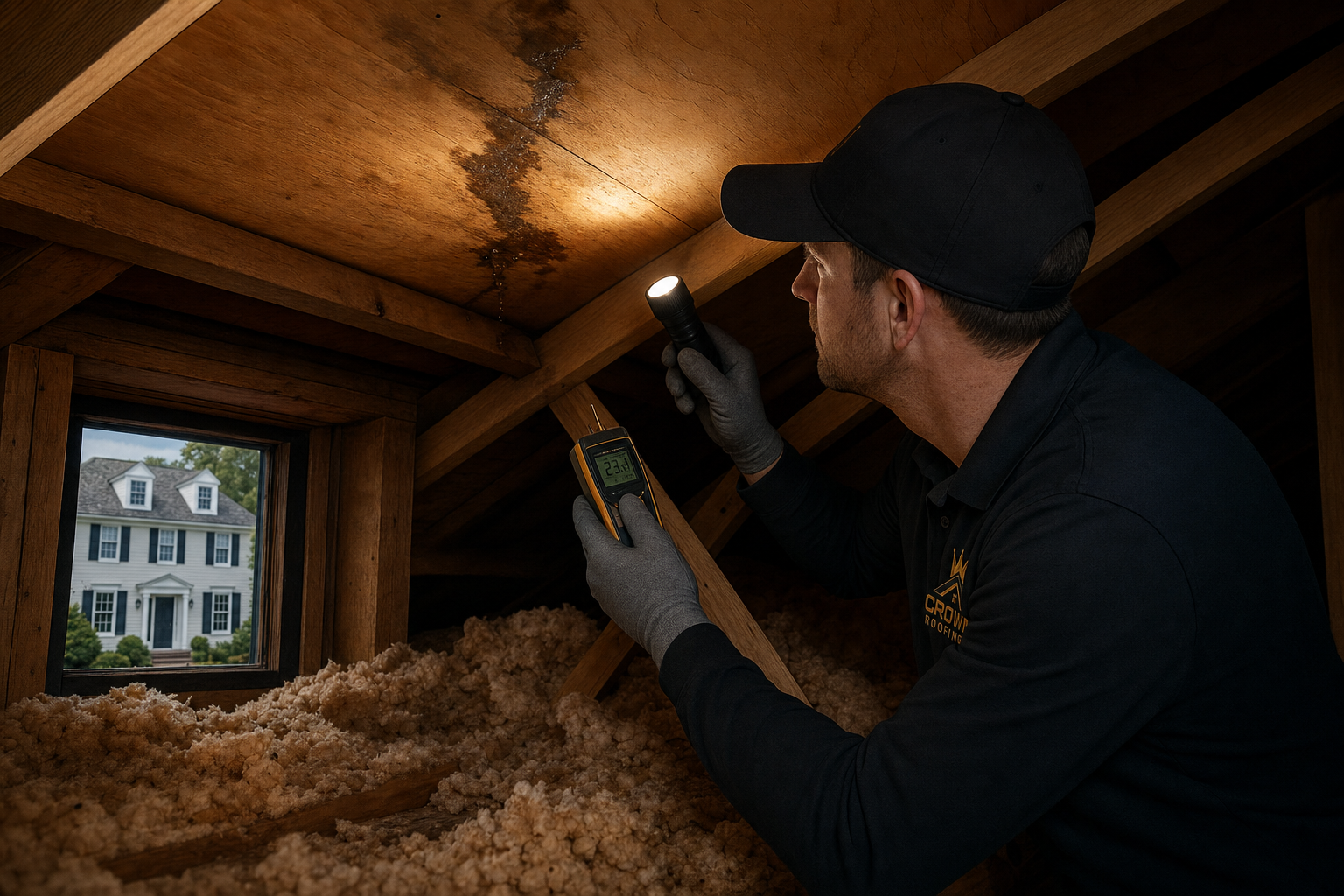
Water entering your home during a Connecticut winter does not behave like a summer leak. Cold attics keep insulation damp for weeks; drywall saturates slowly then fails suddenly; mold can start in hidden cavities before you see a bulge in the ceiling. The steps you take in the first hour protect people, property, and later insurance documentation.
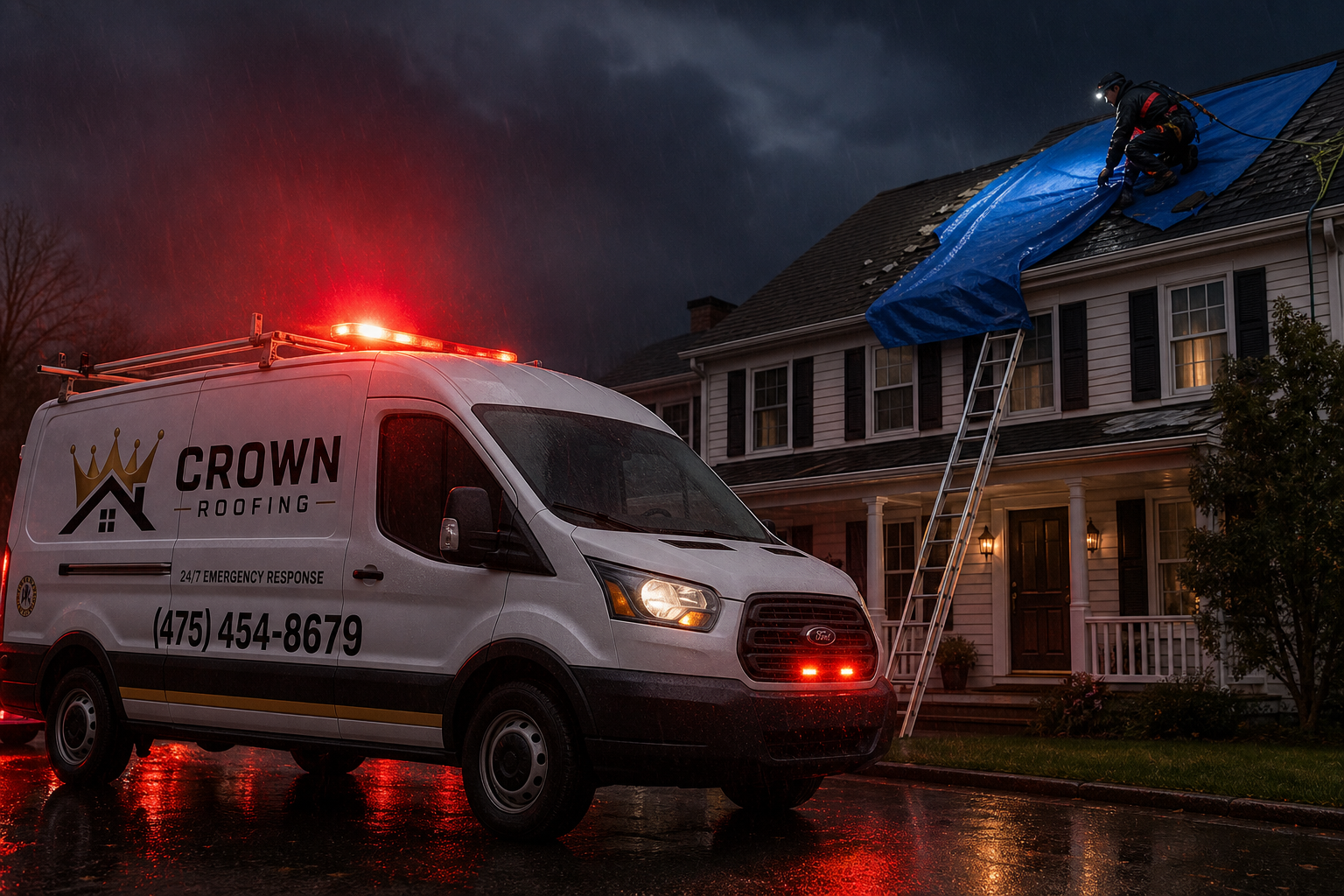
You should not climb an icy or wet roof—that is what emergency roofers are for. You can contain interior damage, note whether water is near electrical fixtures, and call for professional tarping when rain or thaw is forecast. This guide explains what to do safely inside your home, what not to attempt, and when to call (475) 454-8679 for same-day stabilization.
Quick Answer
Contain water, protect belongings, avoid attic entry if ceilings sag, and call for emergency tarping—do not climb an icy or wet roof.
Contain Interior Damage
Use buckets, tarps on furniture, and towels at drip paths. Puncture a small hole in bulging ceiling paint to controlled drain if needed—only if safe and no electrical fixtures are involved.
What Not to Do
- Do not climb icy or wet roofs
- Do not rely on interior caulk alone
- Do not delay until mold starts in cold, damp attics
- Do not run heat guns or open flames near wet insulation
When to Call
Active spreading leaks need emergency service: (475) 454-8679. Mention whether water is near panel boxes or spreading across ceilings.
Protecting Interiors in Winter
Move electronics and documents away from drip lines. Plastic on floors helps even when ceilings look intact—water travels along joists before showing on drywall. Keep heat moderate; aggressive drying without fixing the roof traps moisture in insulation.
Electrical Safety
If water is near panel boxes, fixtures, or outlets, avoid the area and mention it when you call. Turn off affected circuits only if you can do so safely without standing in water. Do not use heat guns or open flames near wet insulation or vapor barriers.
Multi-Unit and Condo Leaks
Notify association management immediately—the source may be common roof area above your unit. Document ceiling damage for association and your insurer separately; responsibility varies by governing documents in Danbury condos near downtown and Stamford high-rises alike.
Mold and Timeline
Cold attics slow mold growth compared to summer, but saturated insulation stays wet for weeks. Stabilize the leak source within days when possible—not after spring flowers. Leak repair plus attic drying prevents remediation bills that dwarf the original roofing fix.
Document for Insurance
Photograph stains, buckets, and damaged belongings before cleanup. Note date and weather event if a storm preceded the leak. Reasonable mitigation—including professional tarping—is usually expected by carriers; keep receipts.
Electrical Safety Reference
NFPA — electrical safety around water emphasizes keeping away from wet outlets and panel areas. If water reaches electrical gear, call your utility or fire department non-emergency line for guidance before entering the space.
When Damage Affects Neighbors
Multi-family buildings in City of Waterbury, CT and City of Stamford, CT may require landlord or association notification within hours. Document who you called and when—lease and HOA rules vary on interior repair authorization before roof access.
Insurance and Emergency Mitigation
Carriers expect reasonable steps to stop damage—document tarps, buckets, and professional emergency calls. Avoid permanent repairs before adjuster review on storm claims unless delay risks structural harm; your contractor should photograph pre-repair conditions.
Flat Porch Emergencies
Rear porch tie-ins on split-levels in Town of Monroe, CT and Town of Brookfield, CT often leak first in thaw. Interior containment helps, but membrane punctures need professional dry-in—homeowner plastic on flat sections rarely survives wind.
When to Leave the Room
Bowing ceilings, bubbling paint over large areas, or water near the main panel mean exit and call professionals—do not attempt heroic fixes. City of Danbury, CT fire and building officials publish safety guidance on municipal sites when widespread storm damage occurs.
Emergency and Leak Services
- Emergency roof repair
- Roof leak repair
- Flat roof repair — porch tie-in leaks
- Roof waterproofing
- Contact for same-day help
24/7 Dispatch Across Connecticut
Safety & Municipal Contacts
- NFPA — electrical safety around water
- City of Danbury, CT, City of Stamford, CT, City of Waterbury, CT, City of Bridgeport, CT
- Connecticut Official State Website
After the Drip Stops
Emergency stabilization is step one—permanent repair and attic drying complete the job. Replace saturated insulation, verify deck dryness, and monitor stains through the next rain event before assuming success. Keep all receipts and photos for insurance; reasonable mitigation is expected, but undocumented damage is harder to recover later.
Save our number for active leaks; for non-emergency inspection scheduling, use the contact form—both paths reach the same Connecticut crew.
Municipal building officials in City of Danbury, CT and City of Stamford, CT may post storm safety bulletins—check official city sites when widespread damage occurs. If ceilings sag or water reaches electrical gear, prioritize safety over property and wait for professional assessment.
Related: emergency roof repair, roof leak repair, and contact Crown Roofing & Exteriors for Connecticut dispatch.
Winter leaks worsen with every freeze-thaw cycle—stabilize early, document thoroughly, and schedule permanent repair when weather allows safe access.
FAQ
A small controlled drain into a bucket can prevent spread if safe—avoid large uncontrolled collapse; evacuate if unsure.
Fans help after the leak source is stopped; active roof leaks need professional repair first.
Winter leaks damage insulation and drywall quickly in cold attics. Stabilize now, permanent repair when weather allows.
Real Connecticut Examples
During a January freeze in Bethel, a family contained a dining-room drip with buckets and called us before ceiling collapse. Tarping the valley transition stopped the spread until permanent flashing repair—total interior damage stayed under two hundred dollars because they did not wait for spring.
Need help with your roof in Connecticut? Contact Crown Roofing & Exteriors for a free inspection or call (475) 454-8679. We serve Danbury, Fairfield & Litchfield Counties, and 30+ cities statewide—with written scopes and photo documentation on every job.
Browse our Roofing Insights hub and Roofing Solutions catalog for more Connecticut winter guides, emergency services, and city-specific roofing pages.