


Your Attic Tells the Truth Before Shingles Do
From the ground, shingles can look acceptable while attic decking rots from the inside out. Warm, moist air from bathrooms, kitchens, and bypasses around chimneys condenses on cold plywood in January. Frost forms on nail tips; mold stains spread toward ridge vents; ice dams grow even after a recent shingle replacement because the thermodynamics never changed.
Ventilation and air-sealing fixes often solve problems that look like field shingle failure. This article explains how to read attic moisture signals, what causes them in Western Connecticut's 1960s–1990s housing stock, and when roof repair alone is wasted money without fixing the air path underneath.
Quick Answer
Warm, moist attic air rots decking, rusts nails, and fuels ice dams at eaves. Ventilation and air-sealing often solve problems that look like shingle failure from the ground.
Signs of Attic Moisture
- Frost on roof nails inside the attic on cold mornings
- Dark staining on plywood near bathrooms or kitchen vents
- Ice dams despite new shingles
- Musty smell or mold on sheathing after thaw
Common Causes in Western Connecticut
Bathroom fans venting into attics, disconnected bath ducts in Newtown colonials, and blocked soffits in 1970s ranches in Danbury are repeat offenders. Cathedral ceilings without vent channels trap heat against decking.
What Helps
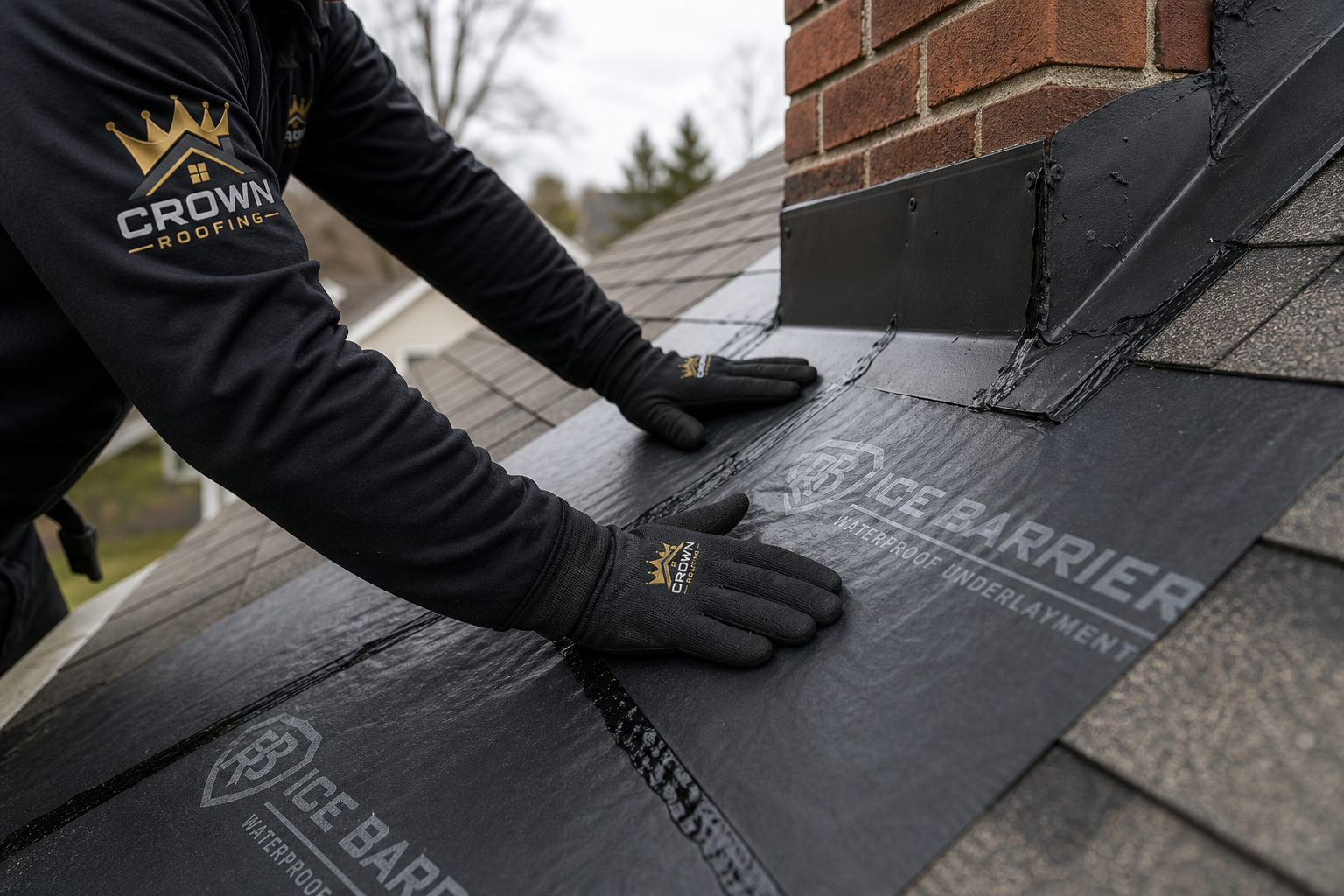
Balance intake and exhaust, route fans outside, and add ice barrier at re-roof. Schedule roof inspection with attic photos before blaming field shingles.
Frost on Nails
On single-digit mornings, peek at your attic (safely, from the hatch) before the sun hits. Light frost on nail tips can appear once; thick frost every cold night means moist air is condensing on decking that will delaminate over seasons.
Bath Fan Routing
Newtown and Monroe renovations often leave bath fans dumping into soffit cavities that recirculate moist air under shingles. Routing through roof or gable walls is cheaper than a premature re-roof caused by rotted plywood.
Whole-House Humidity
Humidifiers set too high in winter, unvented dryers, and bulk storage of firewood in attached spaces add moisture that ends up in the attic. Target relative humidity below forty-five percent in living spaces during cold months when condensation symptoms appear.
Vapor Barriers and Misconceptions
Plastic on attic floor is not a universal fix and can trap moisture in wrong assemblies. Ventilation balance and sealing bypasses at the ceiling plane usually outperform sheet plastic shortcuts recommended by non-roofing trades.
When Decking Must Be Replaced
Soft spots, delaminating plywood, and widespread dark staining require deck replacement in affected areas—often during re-roof. Ventilation fixes stop progression but do not resurrect rotted wood. Schedule inspection with attic photos before blaming field shingles.
Kitchen and Dryer Vents
Kitchen hoods and dryers that terminate near soffits or into attic spaces dump large moisture loads every day—not just in winter. Routing to exterior walls or dedicated roof caps, with rigid duct where possible, prevents chronic condensation that no amount of field shingle repair will fix.
Ventilation Science
U.S. DOE — attic ventilation and insulation basics explains stack effect and air sealing at the ceiling plane—the same physics that drive ice dams in Town of Bethel, CT and Town of New Milford, CT colonials. Warm air rises; if it enters the attic, it condenses on cold decking.
Mold and Disclosure
Connecticut sellers disclose known material defects; attic mold from chronic moisture may trigger remediation before listing. Fix source ventilation before cosmetic attic treatments.
Knee Walls and Bonus Rooms
Finished attic spaces in Town of Ridgefield, CT and Town of Newtown, CT colonials often lack vent channels behind knee walls—deck rots silently behind drywall. Probe from accessible hatches before assuming field shingles failed.
Whole-Home Humidifiers
Winter humidifiers set above forty-five percent relative humidity push moisture into attic via bypasses; dial back when frost appears on nails.
When to Remove Wet Insulation
Saturated fiberglass loses R-value and holds moisture against decking—remove affected batts after leak source is fixed, before mold spreads across Town of Bethel, CT and City of Danbury, CT attic floors.
Fix Roof and Attic Together
- Roof inspection with attic photos
- Replacement with ventilation upgrades
- Waterproofing at eaves
- Repair after moisture damage
- Preventive maintenance
Suburban Housing Stock
Ventilation & Housing Resources
- U.S. DOE — attic ventilation and insulation basics
- City of Danbury, CT, Town of Newtown, CT, Town of Monroe, CT, Town of Bethel, CT, Town of New Milford, CT
Fix the Air Path, Then the Shingle
Attic moisture misdiagnosis leads to repeated shingle repairs that never stop stains. Seal bypasses, route fans outside, balance ventilation, and only then evaluate whether field shingles need replacement. Winter frost on nails is a warning—not a cosmetic curiosity.
Our inspections include attic photos with every roof report so you see the same evidence we use for recommendations.
U.S. DOE — attic ventilation and insulation basics publishes accessible guidance on stack effect and air sealing—worth reading before approving another layer of shingles over a moist attic. Small bypass seals at lights and chases often cost less than one emergency leak call mid-winter.
Related: roof inspection, roof replacement, and roof waterproofing.
Treat attic frost and musty sheathing as urgent as a ceiling stain—both signal moisture that will outlast a shingle patch alone.
Ventilation fixes belong in the same conversation as shingle quotes—never after a third repeat leak.
Connecticut attics tell the truth in January—read them before you blame field shingles from the curb.
FAQ
Some frost on nails can appear on very cold mornings; heavy frost and dripping indicate excess moisture that will rot decking.
Not always—ventilation fixes may stop progression. Soft decking or widespread rot requires replacement of affected areas.
Fans venting into attics cause condensation that mimics roof leaks. Route ducts outside before re-roofing.
Real Connecticut Examples
We traced "mysterious" second-floor stains in a Newtown colonial to a bath fan terminating in the soffit cavity—not a shingle failure at all. Routing the duct through the roof deck stopped condensation that had mimicked leak patterns for two winters.
Need help with your roof in Connecticut? Contact Crown Roofing & Exteriors for a free inspection or call (475) 454-8679. We serve Danbury, Fairfield & Litchfield Counties, and 30+ cities statewide—with written scopes and photo documentation on every job.
Browse our Roofing Insights hub and Roofing Solutions catalog for more Connecticut winter guides, emergency services, and city-specific roofing pages.