

Quick Answer
In a Connecticut summer, an under-ventilated attic can climb past 150°F, baking shingles from below and aging them years faster than the label promises. Balanced intake at the soffits and exhaust at the ridge keeps that heat moving. If your upstairs rooms are hot, your energy bills spiked, or shingles look prematurely curled, have your roof and attic inspected before the damage compounds.
Why Summer Heat Is Hard on Connecticut Roofs
Connecticut roofs take a beating in both directions. Winter brings ice dams and freeze-thaw stress; summer brings intense, humid heat. On a 90°F July day in Danbury, a dark asphalt roof surface can reach 160°F, and a poorly vented attic traps that heat instead of releasing it. Trapped heat cooks the asphalt binders in shingles, drives off protective granules, and can even void portions of a manufacturer warranty that require adequate ventilation.
The humidity that rolls in off Long Island Sound makes it worse—warm, moist attic air condenses on cooler framing at night, feeding mold and rot on the same decking the winter already stressed.
The Rule That Matters: Balanced Intake and Exhaust
Ventilation only works when air can flow through the attic. Cool air should enter low at the soffit/eave (intake) and hot air should escape high at the ridge (exhaust). The goal is roughly balanced net free area between the two—when exhaust far outweighs intake, a ridge vent can actually pull conditioned air from the house instead of the soffits.
- Continuous soffit intake vents kept clear of insulation
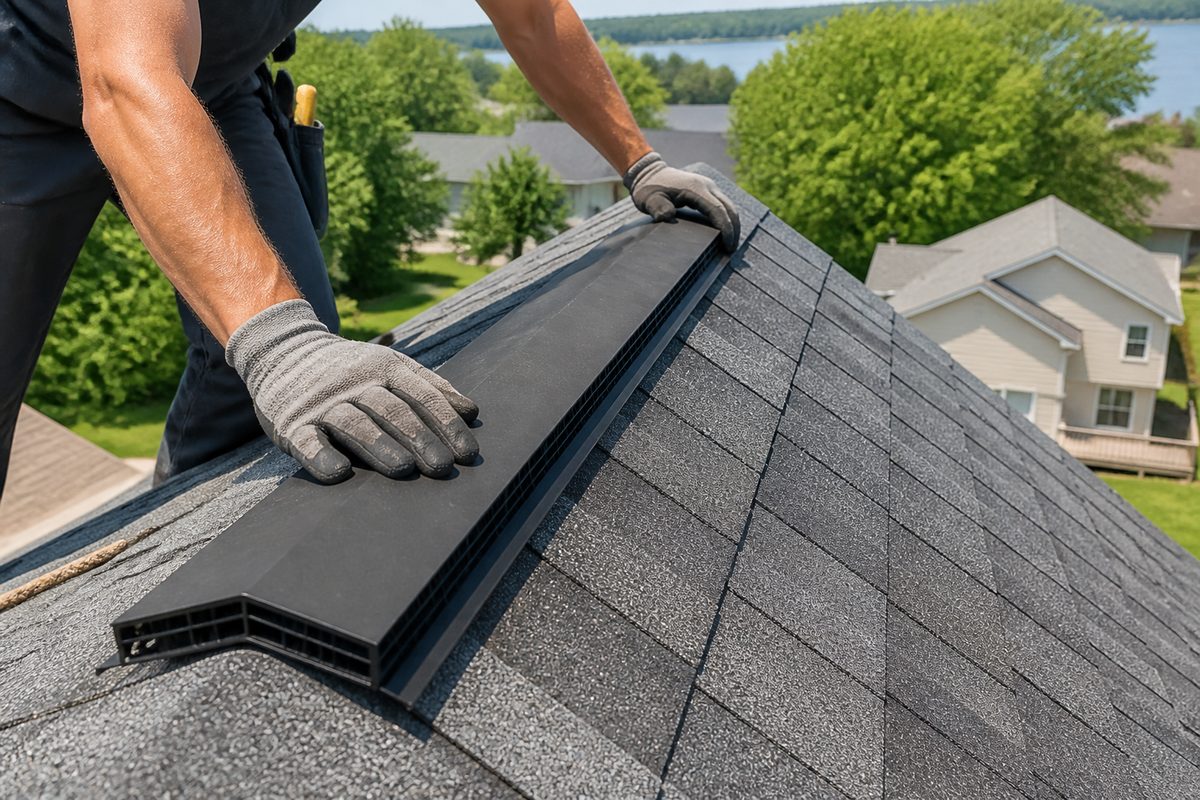
- A continuous ridge vent along the peak for exhaust
- Baffles at the eaves so insulation never blocks airflow
- No mixing of exhaust types (ridge + powered fans + gable vents) that short-circuit each other
Warning Signs of a Ventilation Problem
- Second-floor bedrooms that stay hot into the night
- Cooling bills that jumped without a rate change
- Shingles curling, cupping, or losing granules faster on south/west slopes
- Rusty nail tips or frost in the attic in winter, dampness in summer
- A musty smell or dark staining on the underside of the roof deck
Homes in Danbury, Bethel, and Brookfield built in the 1970s–90s often have undersized or painted-over soffit vents that quietly choke airflow.
The Comfort and Energy Payoff
Fixing ventilation is one of the few roofing upgrades that pays you back every month. When the attic runs closer to outdoor temperature, your air conditioner stops fighting a 150°F heat source overhead. Homeowners routinely report cooler upstairs rooms and lower summer bills after we correct intake and add continuous ridge exhaust—while also extending the life of the shingles above.
How We Fix It
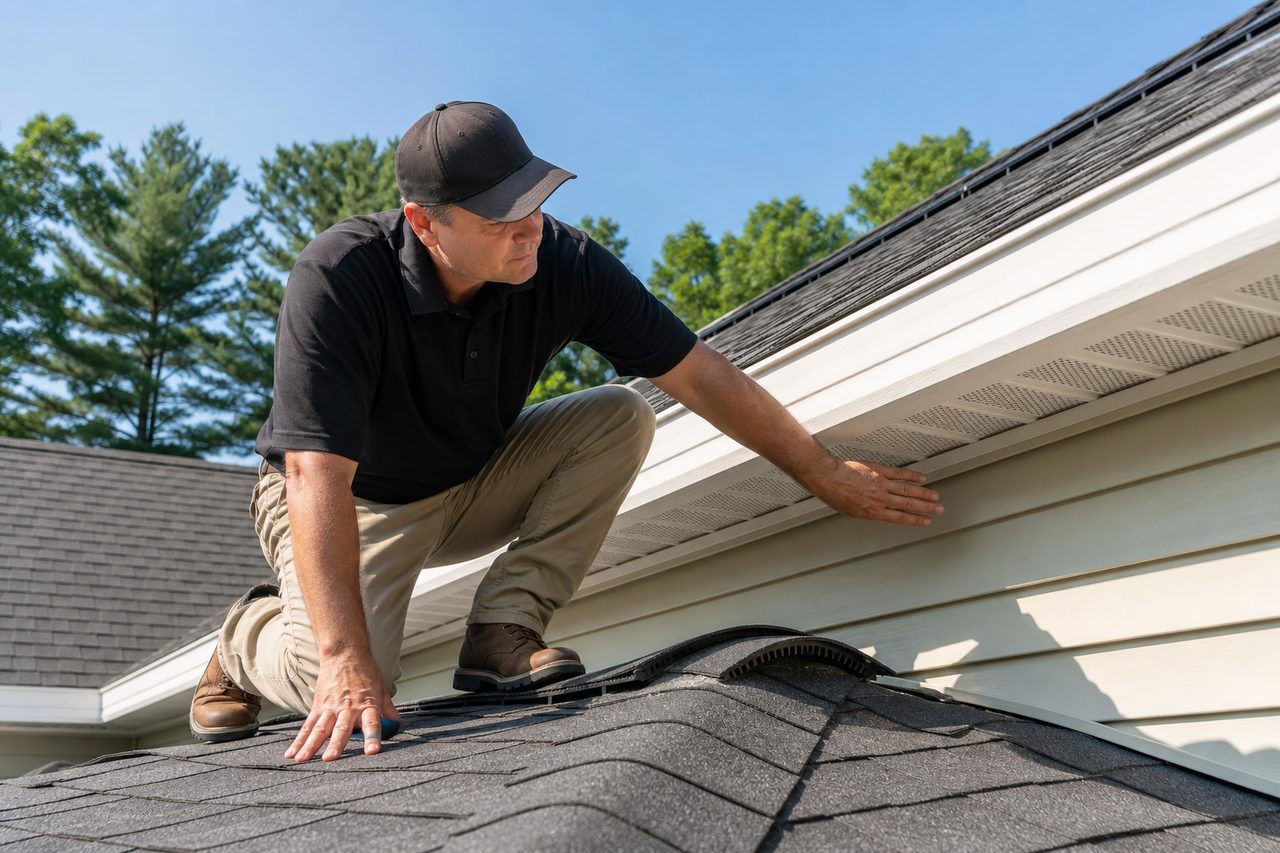
We start in the attic, not on the roof. A proper assessment measures existing net free area, checks for blocked soffits, and looks for moisture clues on the decking. From there the fix may include adding or clearing soffit intake, installing baffles, cutting in a continuous ridge vent, and removing conflicting vents. When ventilation is corrected during a roof replacement, we build ice-and-water protection and balanced airflow into the same scope so the new roof reaches its rated lifespan.
What to Do Next
Summer is the ideal time to catch ventilation problems—the symptoms are obvious and crews are available before fall. Schedule a roof and attic inspection with Crown Roofing & Exteriors, or call (475) 454-8679 for honest, no-pressure guidance.
Connecticut Roofing Context
Freeze-thaw cycles, nor'easters, and heavy snow loads affect Fairfield and Litchfield County roofs differently than mild-climate guides suggest. Local building departments—from City of Danbury, CT to coastal towns—may require permits for full replacement; ice barrier and ventilation details should appear on your written scope before work starts.
Document roof condition with dated photos before and after storms. Clear records help with insurance, resale, and honest repair-versus-replace decisions—not scare tactics or automatic full tear-off quotes.
Related Crown Roofing & Exteriors Services
Connecticut Service Areas
- City of Danbury, CT, Town of Ridgefield, CT, Town of Bethel, CT, Town of Brookfield, CT, Town of Fairfield, CT, Town of Newtown, CT
- Roofing contractor Danbury CT
- All Connecticut cities we serve
Connecticut & Authoritative Resources
- Connecticut Official State Website
- Connecticut Department of Consumer Protection — contractor licensing
- U.S. DOE — attic ventilation and insulation basics
- Fairfield County, Connecticut — Wikipedia overview and Litchfield County, Connecticut — Wikipedia overview — regional context
Before You Hire
Verify Connecticut Department of Consumer Protection — contractor licensing registration, insurance certificates, and written scope before deposits. Crown Roofing & Exteriors serves Danbury and 30+ Connecticut communities with photo-documented inspections and repair-first guidance when it makes sense.
FAQ
A poorly ventilated attic on a 90°F day can exceed 140–160°F. Balanced soffit intake and ridge exhaust can drop that by 20–40 degrees, protecting shingles and lowering cooling costs.
Usually not. In most Connecticut homes, a correctly sized continuous ridge vent with adequate soffit intake outperforms powered fans—and powered fans can pull cooled air out of the living space if intake is inadequate.
Yes. Most manufacturers require adequate attic ventilation. Documented under-ventilation is a common reason warranty claims are denied, which is why we verify it on every inspection.
Absolutely. The same balanced airflow that releases summer heat keeps the roof deck cold and dry in winter, reducing ice dams and attic condensation.
Many intake/exhaust corrections are a few hundred to low four figures depending on soffit work and ridge length. We provide a free written estimate after inspection.
Need help with your roof in Connecticut? Contact Crown Roofing & Exteriors for a free inspection or call (475) 454-8679. We serve Danbury, Fairfield & Litchfield Counties, and 30+ cities statewide—with written scopes and photo documentation on every job.
Browse our Roofing Insights hub and Roofing Solutions catalog for more Connecticut winter guides, emergency services, and city-specific roofing pages.