

Quick Answer
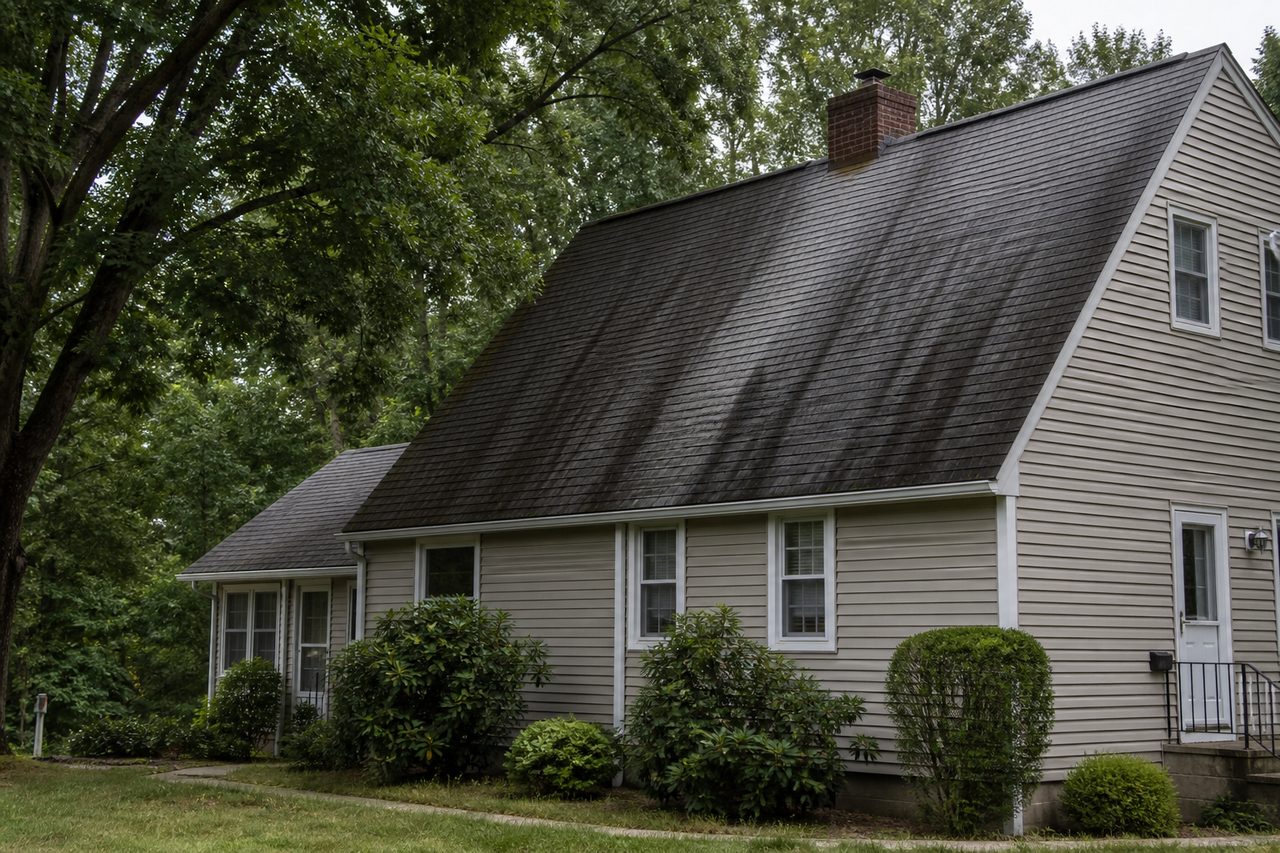
Those ugly black streaks running down your Connecticut roof are almost always algae (Gloeocapsa magma), not dirt or shingle failure. It thrives in our humid summers and won't wash off with a garden hose. Safe, low-pressure soft washing removes it; pressure washing destroys shingles. If streaks are widespread or you're seeing them alongside curling or granule loss, have the roof inspected before cleaning.
What the Black Streaks Actually Are
The dark stains are colonies of a blue-green algae called Gloeocapsa magma. It feeds on the limestone filler in asphalt shingles and protects itself with a dark, UV-resistant sheath—which is why the streaks look black. Spores travel on the wind from roof to roof, so once a neighbor's roof is streaked, yours is usually next. It is a cosmetic and longevity problem first, but left unchecked it holds moisture against the shingle and accelerates granule loss.
Why It's So Common in Connecticut
Fairfield and Litchfield Counties give algae everything it wants: humid summers off Long Island Sound, mature tree canopy that keeps roofs damp and shaded, and long dew periods overnight. North-facing slopes and areas under overhanging branches stay wet the longest and streak first. Homes in wooded Brookfield and Newtown neighborhoods see it especially fast.
How to Clean It Safely (and What to Avoid)
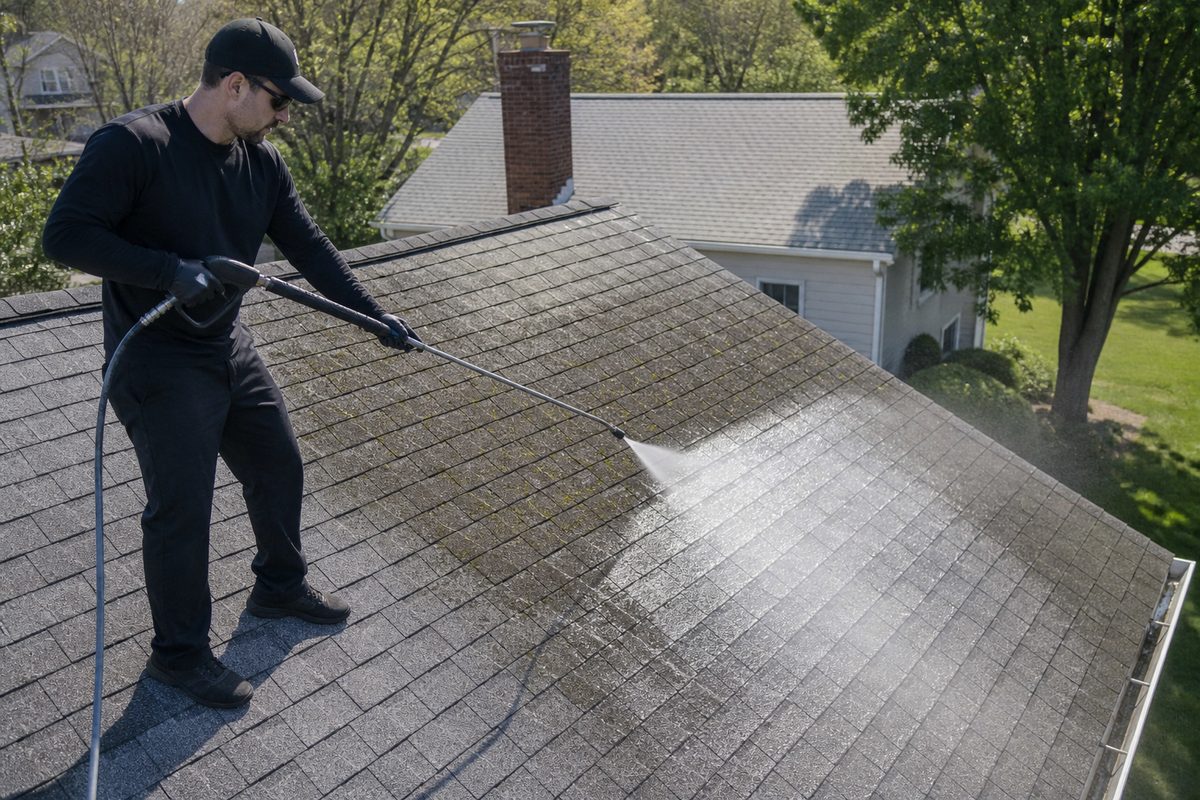
The correct method is a soft wash: a low-pressure application of a cleaning solution that kills the algae, followed by a gentle rinse. Never pressure wash an asphalt roof—the force strips the protective granules and takes years off the shingle.
- Use low pressure and a roof-safe cleaning solution, not a power washer
- Protect plants and gutters; rinse landscaping before and after
- Work from a ladder or walk pads—never scrub aggressively
- When in doubt, hire a pro so runoff and safety are handled correctly
How to Prevent Streaks From Coming Back
Cleaning is temporary if the conditions that feed algae remain. The proven long-term fix is copper or zinc. When it rains, trace metal ions wash down the roof and inhibit algae growth.
- Install zinc or copper strips near the ridge so rain carries ions down the slope
- Trim overhanging branches to let sun dry the roof
- Keep gutters clear so water doesn't back up and stay damp
- On a re-roof, choose algae-resistant (AR) shingles with copper-infused granules
When Cleaning Isn't the Answer
If the streaks come with widespread curling, brittle tabs, or bare spots where granules are gone, the shingles are near the end of their service life and cleaning only buys a little time. In that case a roof replacement with algae-resistant shingles solves the appearance and the aging at once—and is far cheaper than cleaning a roof every couple of years. We'll tell you honestly which situation you're in.
What to Do Next
Not sure if it's algae, moss, or shingle failure? Send us a photo or schedule a free roof inspection with Crown Roofing & Exteriors, or call (475) 454-8679. We serve Fairfield and Litchfield Counties and 30+ Connecticut cities.
Connecticut Roofing Context
Freeze-thaw cycles, nor'easters, and heavy snow loads affect Fairfield and Litchfield County roofs differently than mild-climate guides suggest. Local building departments—from City of Danbury, CT to coastal towns—may require permits for full replacement; ice barrier and ventilation details should appear on your written scope before work starts.
Document roof condition with dated photos before and after storms. Clear records help with insurance, resale, and honest repair-versus-replace decisions—not scare tactics or automatic full tear-off quotes.
Related Crown Roofing & Exteriors Services
Connecticut Service Areas
- City of Danbury, CT, Town of Ridgefield, CT, Town of Bethel, CT, Town of Brookfield, CT, Town of Fairfield, CT, Town of Newtown, CT
- Roofing contractor Danbury CT
- All Connecticut cities we serve
Connecticut & Authoritative Resources
- Connecticut Official State Website
- Connecticut Department of Consumer Protection — contractor licensing
- U.S. DOE — attic ventilation and insulation basics
- Fairfield County, Connecticut — Wikipedia overview and Litchfield County, Connecticut — Wikipedia overview — regional context
Before You Hire
Verify Connecticut Department of Consumer Protection — contractor licensing registration, insurance certificates, and written scope before deposits. Crown Roofing & Exteriors serves Danbury and 30+ Connecticut communities with photo-documented inspections and repair-first guidance when it makes sense.
FAQ
They aren't a safety hazard, but the algae holds moisture against the shingle and slowly accelerates granule loss. It's best treated early, both for curb appeal and roof longevity.
No. Pressure washing strips the protective granules off asphalt shingles and can void your warranty. Algae should be removed with a low-pressure soft wash and a roof-safe solution.
It can if runoff isn't managed. Professionals pre-wet and rinse plantings and control runoff. That's a big reason to have a pro handle roof cleaning.
Yes. Metal ions released during rain inhibit algae growth for the slopes below the strips. It's the most reliable long-term prevention short of algae-resistant shingles.
In shaded, humid areas, streaks can return every 2–4 years without prevention. Adding zinc/copper or AR shingles dramatically extends the interval.
Need help with your roof in Connecticut? Contact Crown Roofing & Exteriors for a free inspection or call (475) 454-8679. We serve Danbury, Fairfield & Litchfield Counties, and 30+ cities statewide—with written scopes and photo documentation on every job.
Browse our Roofing Insights hub and Roofing Solutions catalog for more Connecticut winter guides, emergency services, and city-specific roofing pages.