

Quick Answer
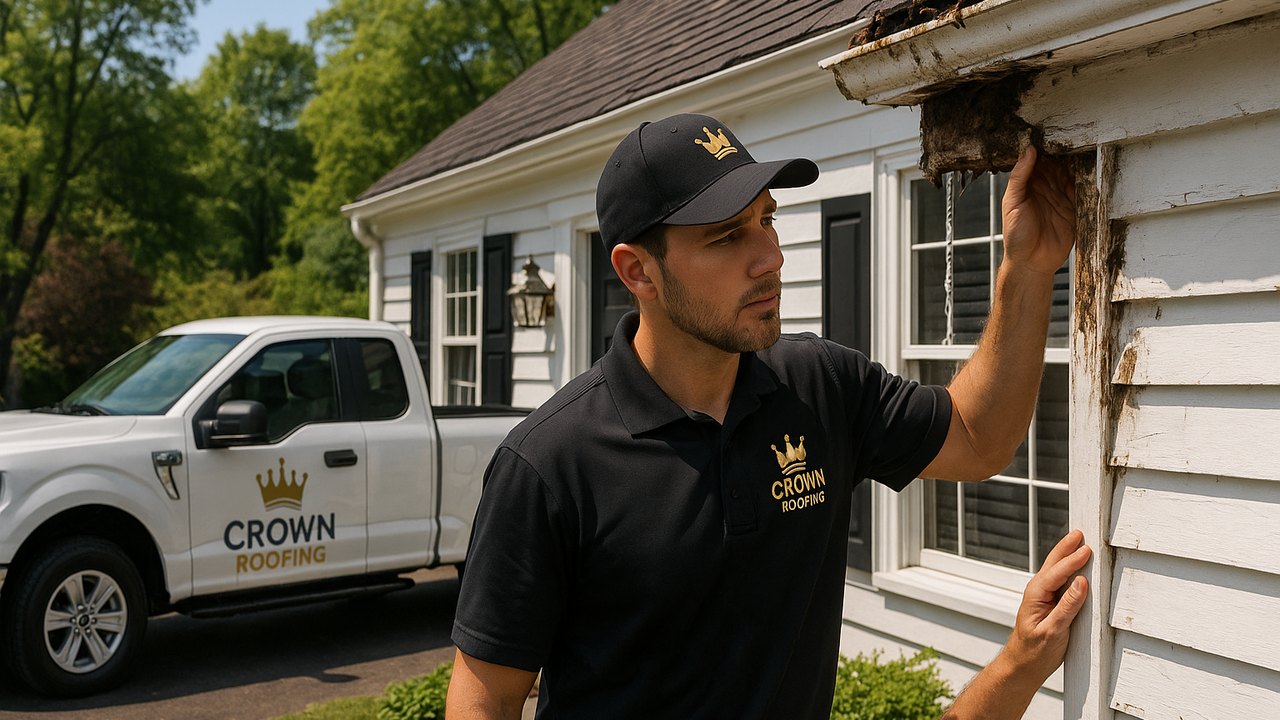
Gutter overflow is a leading cause of fascia rot in Connecticut, especially after heavy summer rain or lingering winter ice. When clogged or damaged gutters spill water behind the eaves, moisture gets trapped in the wooden fascia boards. Over time, this leads to hidden rot that can jeopardize your roof edge, soffits, and even interior ceilings. Prompt gutter repairs and annual cleaning can prevent costly fascia replacement. Crown Roofing & Exteriors repairs and replaces rotted fascia in Danbury, Norwalk, and surrounding towns.
Spotting Fascia Rot Before It Spreads
- Peeling paint or soft spots on fascia boards under the gutter
- Visible mold or dark staining at roof edges
- Gutters pulling away or sagging due to weakened wood
- Unexplained roof leaks near exterior walls
Ridgefield and Brookfield homeowners often first notice trouble after a summer thunderstorm or during spring melt. If you spot these issues, act fast to prevent structural damage—see our roof repair services for more details.
What Causes Gutter Overflow in Connecticut?
Summer leaves, winter ice, and neglected downspouts all play a role. When gutters clog, water has nowhere to go—so it backs up onto your roof and fascia. Here in Fairfield County, freeze-thaw cycles cause blockages to worsen as ice expands inside gutters, wedging seams apart and warping hangers. Nor'easters and heavy rains can quickly overwhelm under-sized or improperly pitched systems, pushing water behind the eaves. It’s not just an eyesore; chronic overflow sets the stage for rot year-round.
Connecticut Weather: Freeze-Thaw Cycles and Fascia Risks
Every winter, gutters fill with snow and freezing rain. When temperatures swing above and below freezing—the classic Connecticut freeze-thaw—ice dams can trap water on the roof edge for days. This moisture seeps into nail holes and seams between the gutter and fascia. Add a spring melt or summer downpour, and minor seepage becomes rot. That’s why Crown Roofing & Exteriors recommends checking gutter and fascia integrity every season, not just in autumn. Learn about ice dam prevention and weather-specific roof repairs in Ridgefield and Brookfield.
Why Fascia Rot is a Bigger Problem Than You Think
Rotten fascia isn’t just a cosmetic issue. Once wood breaks down, it can no longer hold gutters firmly. That leads to sagging, leaks inside the soffit, and—if left unrepaired—hidden water intrusion behind siding or into the attic. Mold growth and pest infestations are common side effects. Insurance may not cover damage if neglect is found. Properly installed aluminum wrap and regular repairs by a licensed Connecticut roofing contractor can stop the cycle before extensive reconstruction is needed.
Fascia Repair and Prevention Options
- Annual gutter cleaning (recommended every spring and fall)
- Seamless gutter upgrades for better water flow
- Gutter guard installation to keep out debris
- Replacing rotted fascia with treated wood or composite
- Aluminum capping for extra protection
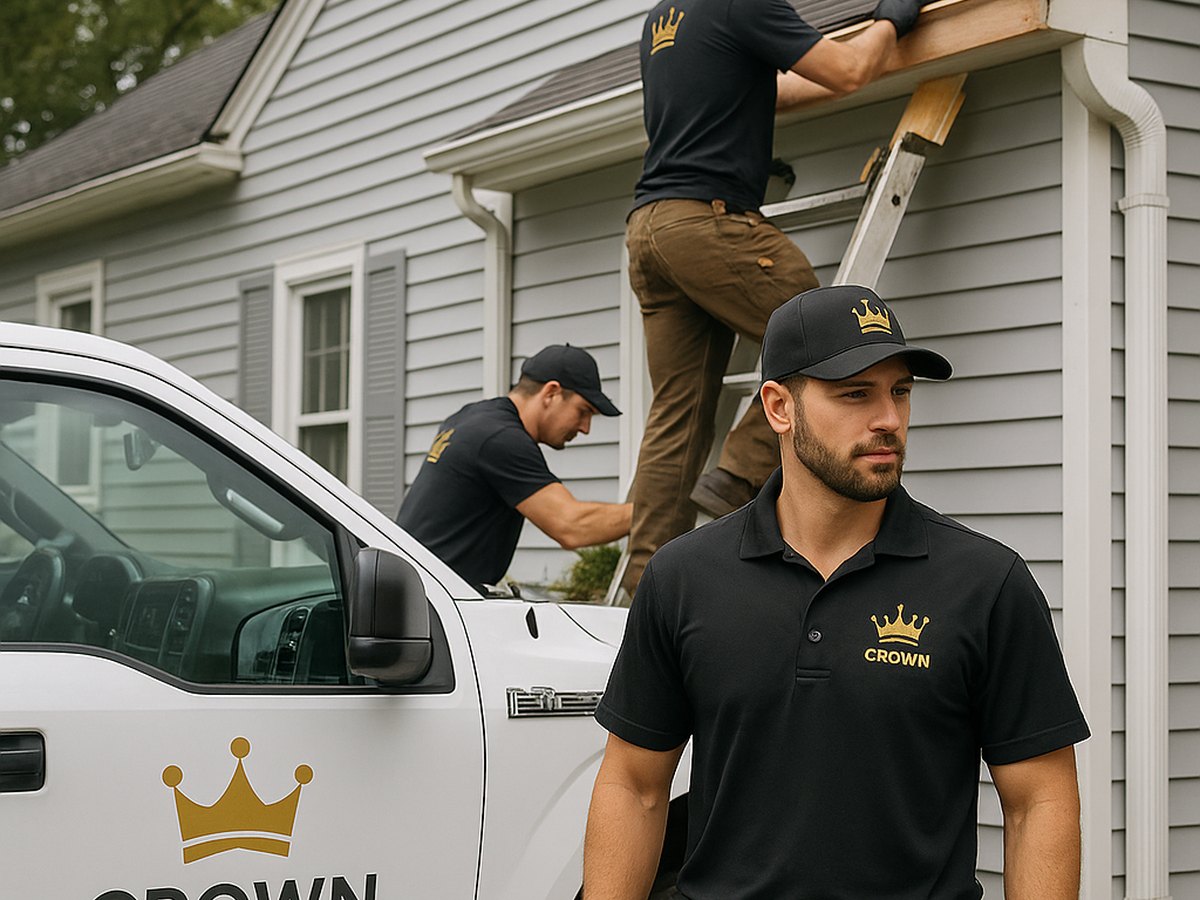
Crown Roofing & Exteriors offers honest repair-versus-replacement advice. We’ll recommend what’s best for your property and budget—see our service options in Danbury and surrounding towns.
FAQs: Gutter Overflow & Fascia Repair in Connecticut
- How do I know if my gutter overflow caused fascia rot? Look for soft, crumbling wood behind the gutter or evidence of water stains. If in doubt, get a professional inspection.
- Can I just patch the fascia? Small patches may delay repairs but don’t stop moisture if the source isn’t fixed. Full replacement with new wood or composite is safest if rot is extensive.
- Does insurance cover gutter or fascia repairs? Usually not if due to neglect, but storm-related damage is sometimes eligible—always document with photos after storms.
- What’s the best time of year for gutter repairs in Connecticut? Early spring and late fall, before or after the freeze-thaw season, minimize water damage risk and give you time to address issues before storms.
Schedule Your Fascia and Gutter Inspection
If you’ve noticed gutter overflow, sagging boards, or suspect hidden rot, call Crown Roofing & Exteriors at (475) 454-8679 or visit our roof repair page to request an inspection. Our team serves homes throughout Fairfield and Litchfield Counties, including Stamford and Newtown. We’ll give you clear, honest advice—no high-pressure sales, just experienced Connecticut roofers protecting your home.
Connecticut Roofing Context
Freeze-thaw cycles, nor'easters, and heavy snow loads affect Fairfield and Litchfield County roofs differently than mild-climate guides suggest. Local building departments—from City of Danbury, CT to coastal towns—may require permits for full replacement; ice barrier and ventilation details should appear on your written scope before work starts.
Document roof condition with dated photos before and after storms. Clear records help with insurance, resale, and honest repair-versus-replace decisions—not scare tactics or automatic full tear-off quotes.
Related Crown Roofing & Exteriors Services
Connecticut Service Areas
- City of Danbury, CT, Town of Ridgefield, CT, Town of Bethel, CT, Town of Brookfield, CT, Town of Fairfield, CT, Town of Newtown, CT
- Roofing contractor Danbury CT
- All Connecticut cities we serve
Connecticut & Authoritative Resources
- Connecticut Official State Website
- Connecticut Department of Consumer Protection — contractor licensing
- U.S. DOE — attic ventilation and insulation basics
- Fairfield County, Connecticut — Wikipedia overview and Litchfield County, Connecticut — Wikipedia overview — regional context
Before You Hire
Verify Connecticut Department of Consumer Protection — contractor licensing registration, insurance certificates, and written scope before deposits. Crown Roofing & Exteriors serves Danbury and 30+ Connecticut communities with photo-documented inspections and repair-first guidance when it makes sense.
FAQ
At least twice a year—after spring pollen drop and after autumn leaf fall. More often if you have pine trees or heavy storm debris.
Absolutely. Rotted fascia allows water to bypass the roof edge, sometimes leaking into soffits, wall cavities, or even your attic insulation.
In areas with lots of trees, yes. Quality guards reduce clogs, overflow, and the need for frequent cleaning, especially after storms.
Look for sagging gutters, paint bubbling, or dark streaks under the eaves. Poke wood with a screwdriver—spongy or soft means rot.
Yes, but spring and fall are ideal. We schedule urgent repairs in winter when necessary, especially after storms or ice dam events.
Need help with your roof in Connecticut? Contact Crown Roofing & Exteriors for a free inspection or call (475) 454-8679. We serve Danbury, Fairfield & Litchfield Counties, and 30+ cities statewide—with written scopes and photo documentation on every job.
Browse our Roofing Insights hub and Roofing Solutions catalog for more Connecticut winter guides, emergency services, and city-specific roofing pages.