


Quick Answer
Roof waterproofing is one of the most effective ways Connecticut homeowners can prevent leaks during harsh winter weather. Applying advanced membranes and sealants before the cold season gives your roof a critical defense against freeze-thaw cycles, ice dams, nor'easters, and persistent snow load. If you own a home in Danbury or Ridgefield, waterproofing now can save you from costly repairs come March.
Why Waterproofing Matters for Connecticut Roofs
Connecticut’s winter weather is especially tough on roofs. When snow melts, water can back up under shingles, then freeze overnight—a classic freeze-thaw scenario that causes slow but steady damage. Waterproofing creates a durable barrier that keeps water out, even if ice dams form along your eaves. This is different from standard roofing felt; professional-grade membranes adhere tightly at vulnerable areas like valleys, skylight curbs, and chimneys.
Connecticut’s Unique Seasonal Challenges
From November through March, our region faces repeated nor’easters, heavy snow, and temperature swings. Roofs in towns like Brookfield and Newtown must stand up to ice dams that push water back under shingles, as well as snow loads that stress weak points in flashing or seams. Once freeze-thaw cycles start, minor leaks can quickly turn into ceiling stains, mold, or rotten decking. That’s why Crown Roofing & Exteriors recommends not waiting until the first sign of water intrusion before acting.
What Is Roof Waterproofing, Technically?
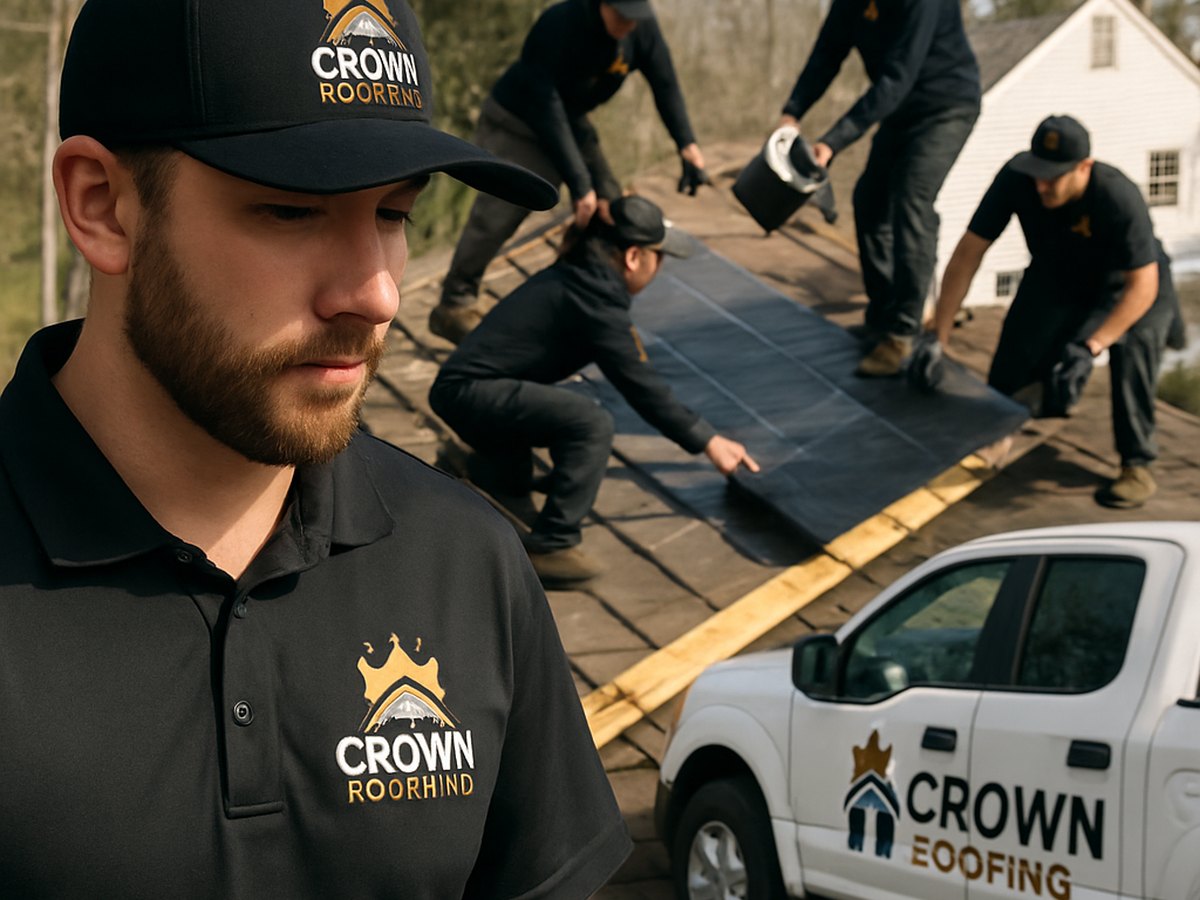
Roof waterproofing isn’t just an extra layer of tar paper. We use self-adhered membranes (sometimes known by brand names like Ice & Water Shield) that seal directly to decking and around penetrations. These products are especially critical for low-slope or flat roofs, but even steep-pitch roofs in Connecticut benefit at roof edges, valleys, and anywhere water might linger. Our team applies these materials with attention to staging and sequence, so seams overlap properly and no “fishmouths” (raised seams) develop.
Common Leak Zones: Where Waterproofing Saves You
- Roof eaves (prime spot for ice dam leaks)
- Valleys where two roofs meet
- Chimney bases and crickets
- Skylight curbs
- Plumbing vent stacks and exhaust fans
We see many leaks in Fairfield homes at valleys and around skylight curbs—often because older installations lack a robust membrane. Proactively waterproofing these areas can prevent moisture from ever entering your attic insulation or drywall.
Signs Your Roof May Need Waterproofing
- Water stains near ceilings after snowmelt
- Ice forming at roof edges or in gutters
- Shingle edges curling or cracking in spring
- Persistent moss or mold in attic
- Older roofing (15+ years) with missing underlayment
If you’re seeing any of these in your Danbury or Ridgefield property, call Crown Roofing & Exteriors at (475) 454-8679 for a professional inspection.
How Crown Roofing & Exteriors Waterproofs Connecticut Roofs
Our process starts with a detailed inspection of your roof—inside and out. We prioritize leak-prone zones and install self-sealing membranes at all critical points. For flat roofs, we also recommend liquid-applied waterproofing or TPO overlays, especially if past ponding has occurred. Shingle or metal roofs get edge ice barriers, valley membranes, and fully sealed skylight and chimney curbs. Every project is backed by local references and a written warranty.
Best Time to Schedule Roof Waterproofing in Connecticut
The optimal window for waterproofing is late summer into early fall—before the first nor’easter threatens. This gives membranes plenty of time to cure and ensures your roof is sealed tight against winter. If you’re unsure, our roof repair team can advise whether you need a targeted fix or a comprehensive upgrade. Don’t wait for an emergency—leak prevention is far less costly than repair after the fact.
Connecticut Roofing Context
Freeze-thaw cycles, nor'easters, and heavy snow loads affect Fairfield and Litchfield County roofs differently than mild-climate guides suggest. Local building departments—from City of Danbury, CT to coastal towns—may require permits for full replacement; ice barrier and ventilation details should appear on your written scope before work starts.
Document roof condition with dated photos before and after storms. Clear records help with insurance, resale, and honest repair-versus-replace decisions—not scare tactics or automatic full tear-off quotes.
Related Crown Roofing & Exteriors Services
Connecticut Service Areas
- City of Danbury, CT, Town of Ridgefield, CT, Town of Bethel, CT, Town of Brookfield, CT, Town of Fairfield, CT, Town of Newtown, CT
- Roofing contractor Danbury CT
- All Connecticut cities we serve
Connecticut & Authoritative Resources
- Connecticut Official State Website
- Connecticut Department of Consumer Protection — contractor licensing
- U.S. DOE — attic ventilation and insulation basics
- Fairfield County, Connecticut — Wikipedia overview and Litchfield County, Connecticut — Wikipedia overview — regional context
Before You Hire
Verify Connecticut Department of Consumer Protection — contractor licensing registration, insurance certificates, and written scope before deposits. Crown Roofing & Exteriors serves Danbury and 30+ Connecticut communities with photo-documented inspections and repair-first guidance when it makes sense.
FAQ
Even newer roofs in Connecticut can benefit from strategic waterproofing at eaves, valleys, and penetrations—especially if your area sees ice dams or heavy snow. Modern membranes add peace of mind and prevent minor leaks from escalating.
Yes—when applied correctly, waterproofing membranes block water that backs up behind ice dams, stopping leaks before they reach your attic or walls. This is especially important for homes in areas like Ridgefield and Newtown.
Quality waterproofing membranes can last as long as your shingles (20+ years), but exposure, debris, and poor attic ventilation can shorten their lifespan. Annual inspections help ensure your protection remains intact.
Absolutely. Flat roofs are especially vulnerable to ponding and leaks at seams. We use liquid or membrane systems developed for flat and low-slope roofs across Connecticut.
Most insurance policies don’t require waterproofing, but they do expect you to maintain your property. Proactive waterproofing can sometimes help with claims if a storm or ice dam does cause a leak.
Need help with your roof in Connecticut? Contact Crown Roofing & Exteriors for a free inspection or call (475) 454-8679. We serve Danbury, Fairfield & Litchfield Counties, and 30+ cities statewide—with written scopes and photo documentation on every job.
Browse our Roofing Insights hub and Roofing Solutions catalog for more Connecticut winter guides, emergency services, and city-specific roofing pages.